Curie Brief
Turn on cookies to sign in
Signing in saves your progress to your Curie account. We can only do that with cookies on — turn them on to continue.
Patients who had radial keratotomy (RK) decades ago now face a tricky combo: cataracts plus daily vision fluctuations caused by structurally weakened corneas. Surgeons are turning to nondiffractive extended depth of focus (EDOF) IOLs and small-aperture lenses as the best tools to buffer these shifts. With careful biometry, surgical planning, and patient counseling, good outcomes are achievable — even in these complex eyes.
Millions of patients who underwent radial keratotomy (RK) in the 1980s and '90s are now hitting cataract surgery age — and they're bringing a uniquely complicated set of challenges. RK incisions, which can reach 90% of corneal depth, permanently weaken the cornea's structure, causing it to flatten overnight and steepen throughout the day. This "diurnal shift" can swing vision by 0.5 D to over 1.5 D within a single day, making standard IOL selection a real challenge.
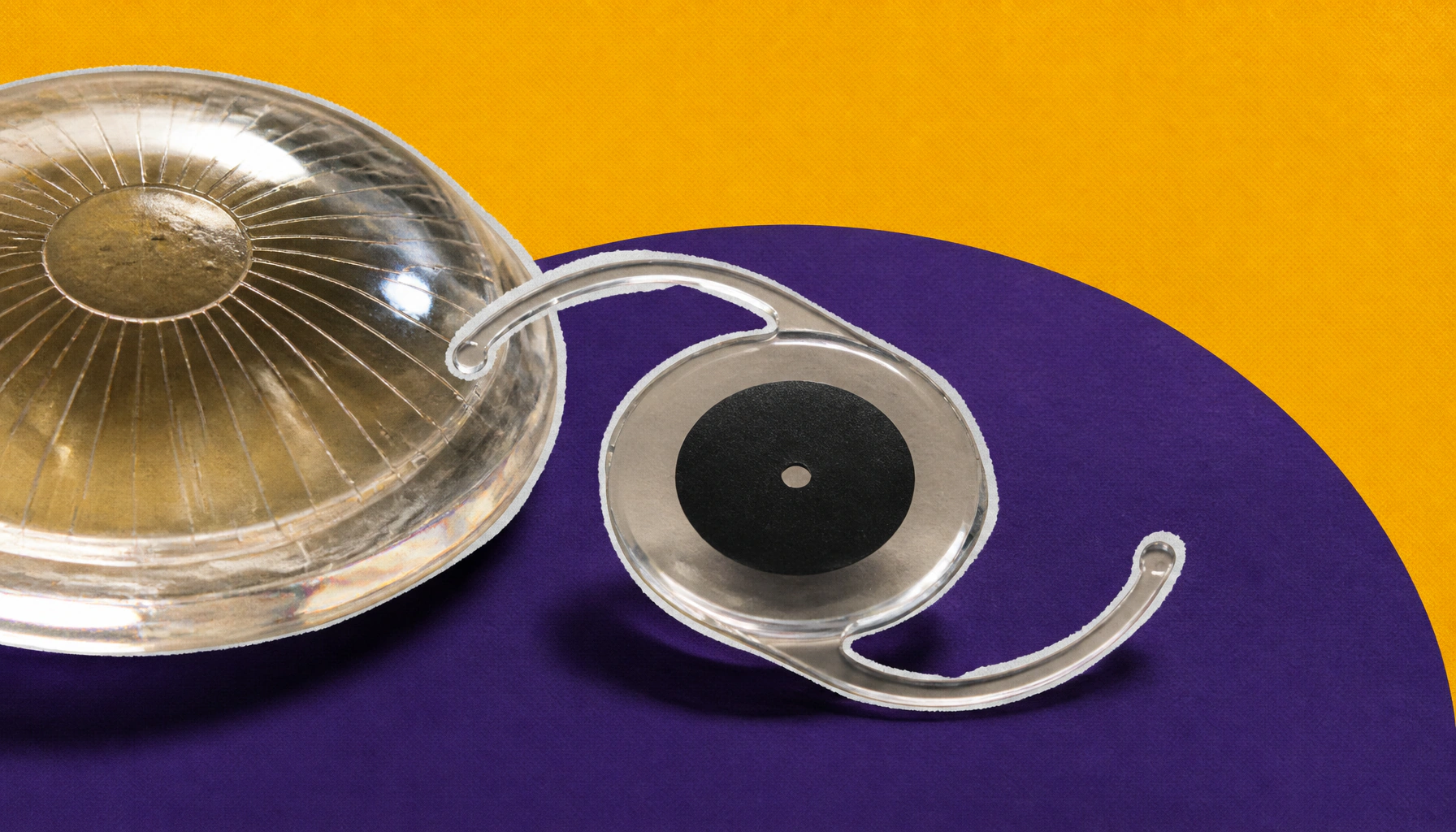
The emerging consensus among experts is that nondiffractive EDOF IOLs are the go-to choice for most post-RK cataract patients, offering roughly 1.75 D of continuous visual range that acts as a buffer against daily corneal fluctuations. For highly aberrated corneas, the small-aperture IC-8 Apthera IOL (which uses a pinhole effect to mask up to 2–3 D of irregular astigmatism) and the Light Adjustable Lens (LAL), which can be fine-tuned post-surgery, are strong alternatives. Traditional diffractive multifocal IOLs are generally avoided due to contrast sensitivity loss.
Key Takeaways:
Why it matters: As the RK generation ages into cataract territory, surgeons need a clear playbook. The right IOL choice — paired with meticulous planning and honest patient counseling — can transform a complex, unpredictable case into a rewarding outcome.