


Curie Brief
Turn on cookies to sign in
Signing in saves your progress to your Curie account. We can only do that with cookies on — turn them on to continue.
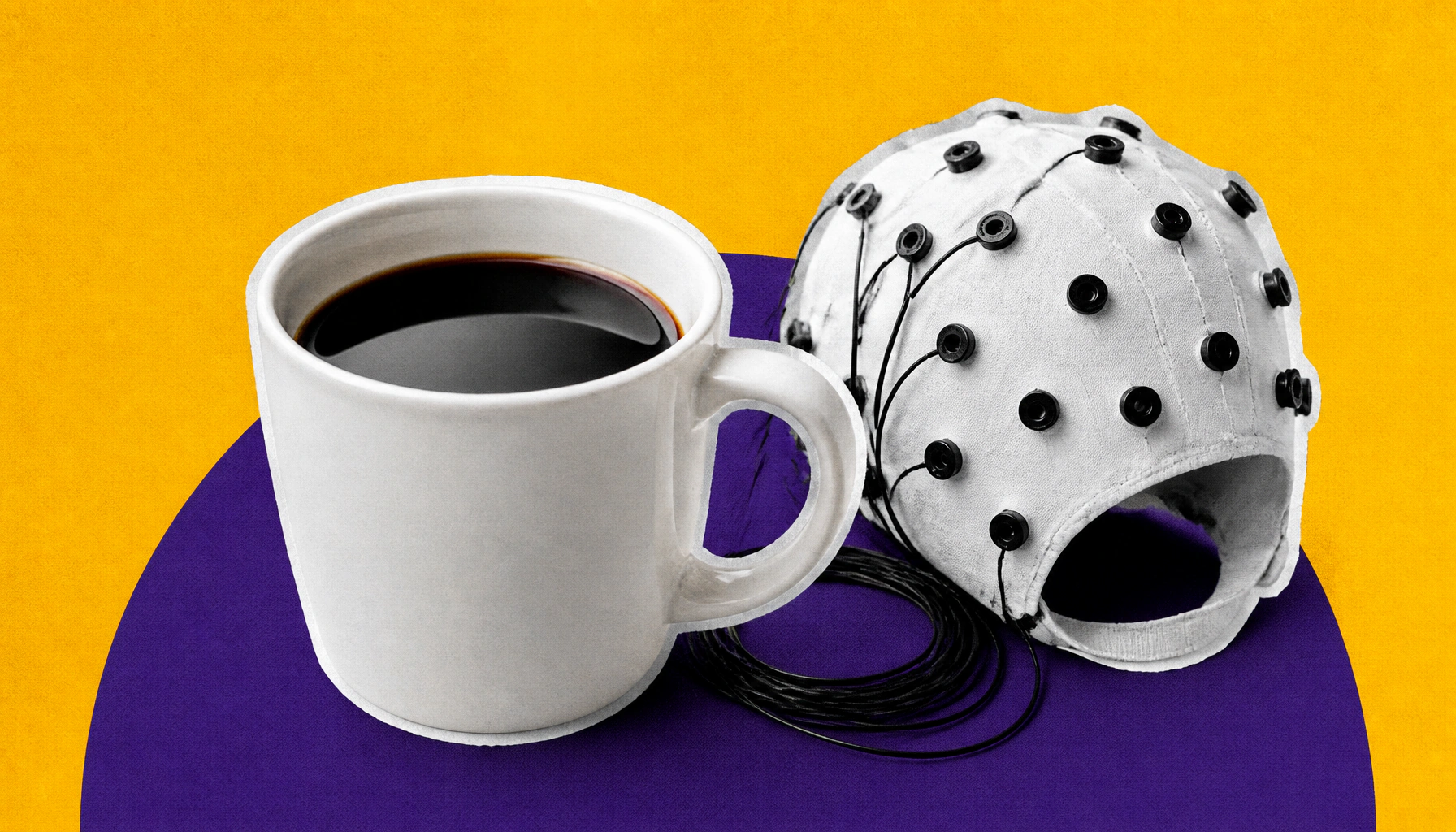
Think caffeine only disrupts sleep if it keeps you awake? Think again. New research from Wroclaw Medical University shows that caffeine can reduce slow-wave brain activity — the hallmark of deep, restorative sleep — even when you fall asleep normally and stay in bed all night. You might feel like you slept fine while your brain tells a very different story.
Think caffeine only disrupts sleep if it keeps you awake? Think again. Researchers at Wroclaw Medical University are using EEG (electroencephalography) to look beyond basic sleep metrics like duration and wake-ups — and what they're finding is striking. Caffeine can suppress slow-wave brain activity, the key marker of deep, restorative sleep, even when a person falls asleep easily and stays in bed for a full eight hours.
The tricky part? You might feel like you slept fine. "The subjective feeling of having slept well does not always correspond to what we observe in neurophysiological recordings," says Prof. Donata Kurpas. That disconnect means many people are unknowingly running a sleep deficit — and reaching for more caffeine the next day to compensate, creating a fatigue cycle that's hard to break.
Key Takeaways:
Why it matters: For clinicians, this research underscores the importance of asking patients not just if they sleep, but how well their brain is recovering. Caffeine's hidden impact on sleep quality may be a key — and often overlooked — factor in fatigue, cognitive performance, and overall health.


