


Curie Brief
Turn on cookies to sign in
Signing in saves your progress to your Curie account. We can only do that with cookies on — turn them on to continue.
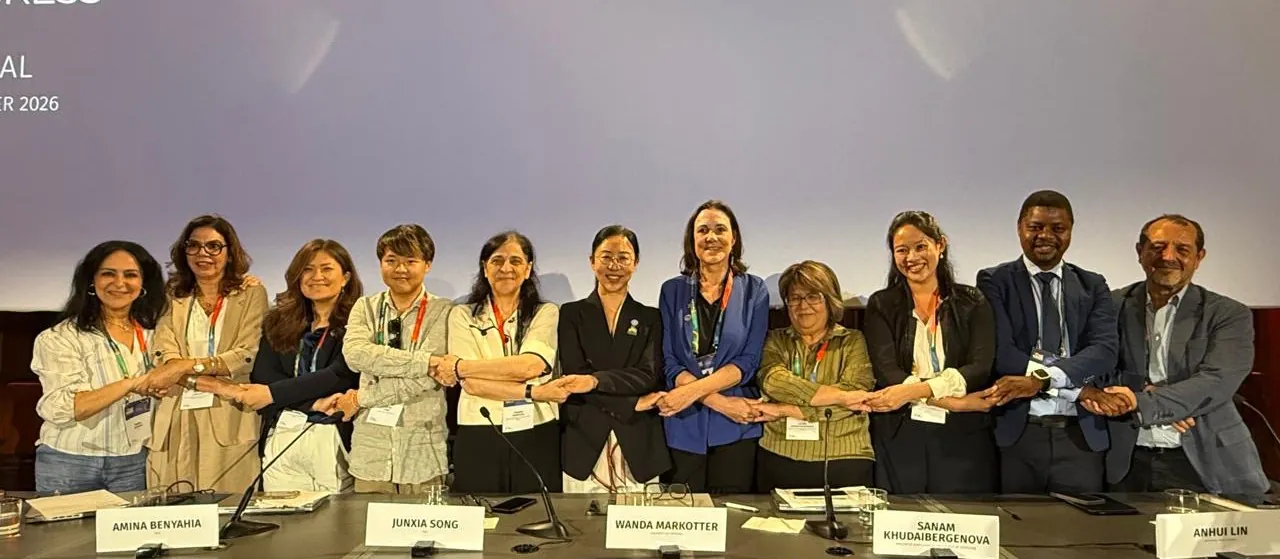
The 9th World One Health Congress brought together 1,300+ participants in Lisbon to tackle a pressing question: how do we put One Health into practice? WHO, FAO, UNEP, and WOAH spotlighted country-level implementation, scientific evidence, and smarter financing as the keys to connecting human, animal, plant, and ecosystem health in meaningful ways.
The 9th World One Health Congress, held in Lisbon from September 4–7, 2026, drew over 1,300 researchers, policymakers, and practitioners united around a single challenge: turning global One Health commitments into real-world results. The Quadripartite — WHO, FAO, UNEP, and WOAH — led joint sessions focused on three pillars: country-level implementation, scientific evidence, and sustainable investment.
On the implementation front, representatives from Malawi, Singapore, and Uzbekistan shared how they're adapting the One Health Joint Plan of Action (OHJPA) to their national contexts, offering candid insights into what's working and what's getting in the way. Meanwhile, the One Health High-Level Expert Panel (OHHLEP) presented 10 new recommendations to help countries overcome barriers and strengthen cross-sectoral coordination. Financing also took center stage, with sessions exploring blended financing models and a joint World Bank discussion on building the investment case for One Health.
Key Takeaways:
Why it matters: One Health is an operational framework for preventing the next pandemic and managing shared health risks across species and ecosystems. Getting the financing and implementation right could be the difference between preparedness and crisis.


