Curie Brief
Turn on cookies to sign in
Signing in saves your progress to your Curie account. We can only do that with cookies on — turn them on to continue.
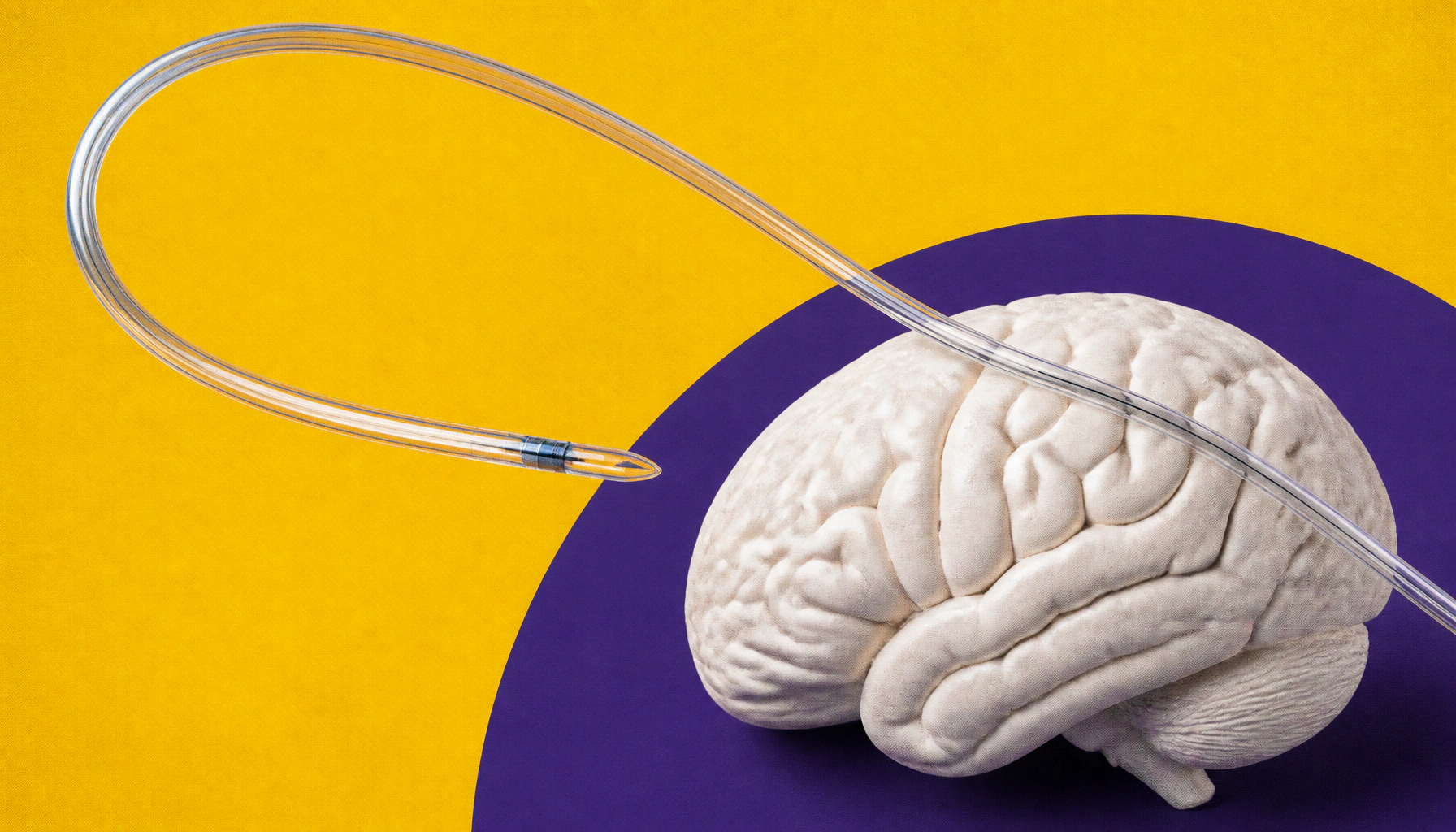
A needle-thin brain implant called the mAxialtrode can record neural signals, deliver drugs, and stimulate multiple brain regions simultaneously — all from a single flexible fiber. Tested successfully in mice, it could transform how scientists study the brain and may one day help treat conditions like epilepsy. Clinical use is still years away, but the research team is already exploring a path to patient trials.
Researchers from DTU, the University of Copenhagen, and University College London have developed a groundbreaking brain implant called the microfluidic Axialtrode (mAxialtrode) — a flexible, needle-thin fiber less than half a millimeter wide that can record neural activity, deliver drugs, and apply electrical or light stimulation to multiple brain regions at once. Unlike conventional brain implants made from rigid silicon, the mAxialtrode is crafted from soft, plastic-like optical fibers, making it less likely to irritate brain tissue or trigger inflammation.
In live mouse experiments, the device successfully stimulated neurons using both blue and red light, recorded electrical activity from the cortex and hippocampus simultaneously, and delivered substances to locations nearly 3mm apart — all through a single lightweight implant the mice tolerated without obvious discomfort. The findings were published in Advanced Science.
Key Takeaways:
Why it matters: This multi-functional implant could dramatically reduce the number of devices needed for complex brain research, enabling more precise, less invasive experiments — and potentially paving the way for next-generation treatments for epilepsy, memory disorders, and beyond.