Curie Brief
Turn on cookies to sign in
Signing in saves your progress to your Curie account. We can only do that with cookies on — turn them on to continue.
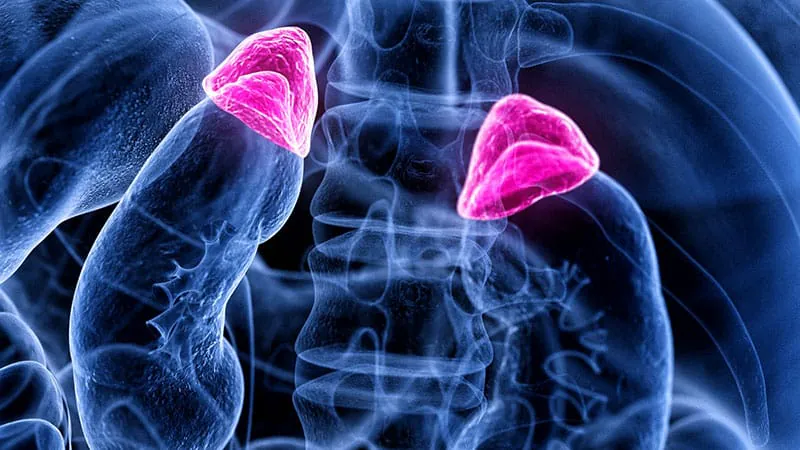
How much cortisol matters in adrenal cancer. A new multicenter study of 101 patients found that higher urinary cortisol levels at diagnosis significantly raised the risk of tumor recurrence or progression in adrenocortical carcinoma (ACC). Both cortisol levels and tumor size independently predicted metastatic disease at diagnosis, suggesting hormonal activity deserves a seat at the table when assessing patient risk.
A new international multicenter study published in The Journal of Clinical Endocrinology & Metabolism found that the severity of cortisol excess at diagnosis is a meaningful predictor of outcomes in patients with Cushing syndrome (CS) caused by adrenocortical carcinoma (ACC) — a rare and aggressive cancer. Researchers analyzed 101 patients and categorized them by urinary free cortisol (UFC) levels: mild, moderate, or severe hypercortisolism.
The results were striking: as cortisol severity increased, so did the risk of tumor recurrence or progression — jumping from 21% in the mild group to 57% in the severe group. Metastatic disease was present in over half of patients at diagnosis, and both UFC levels and tumor size independently distinguished metastatic from localized disease.
Why it matters: These findings suggest that measuring cortisol levels at diagnosis isn't just about managing symptoms — it could help clinicians better stratify ACC patients by recurrence risk and tailor follow-up and treatment strategies accordingly.