Curie Brief
Turn on cookies to sign in
Signing in saves your progress to your Curie account. We can only do that with cookies on — turn them on to continue.
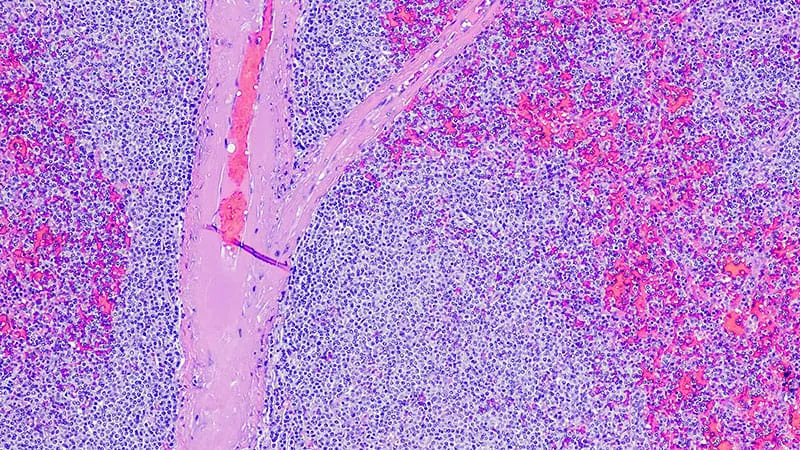
Adding lenalidomide to rituximab maintenance didn't significantly boost survival in older patients with relapsed/refractory follicular lymphoma, a phase 3 trial found. While the combo showed a numerical edge in progression-free survival, it also came with more serious side effects. A silver lining: patients under 70 appeared to benefit meaningfully from the combination.
A phase 3 randomized trial published in Blood Advances found that adding lenalidomide to standard rituximab maintenance therapy did not significantly improve 2-year progression-free survival (PFS) in older or transplant-ineligible patients with relapsed/refractory (R/R) follicular lymphoma. The study enrolled 152 patients (median age 71) who had responded to salvage immunochemotherapy, randomizing them to rituximab alone or rituximab plus lenalidomide. While the combination arm showed a numerical PFS advantage, it didn't cross the threshold for statistical significance — and came with a higher burden of serious side effects.
However, an unplanned subgroup analysis offered a notable finding: patients younger than 70 showed a striking benefit from the combination, with 2-year PFS of 96% vs. 69% for rituximab alone — a difference that was statistically significant.
By the Numbers:
Why it matters: Relapsed/refractory follicular lymphoma is notoriously hard to manage in older patients with limited treatment options. These findings suggest that a one-size-fits-all maintenance approach may not be optimal — and that age-stratified, personalized strategies could be key to improving outcomes while managing toxicity.