Curie Brief
Turn on cookies to sign in
Signing in saves your progress to your Curie account. We can only do that with cookies on — turn them on to continue.
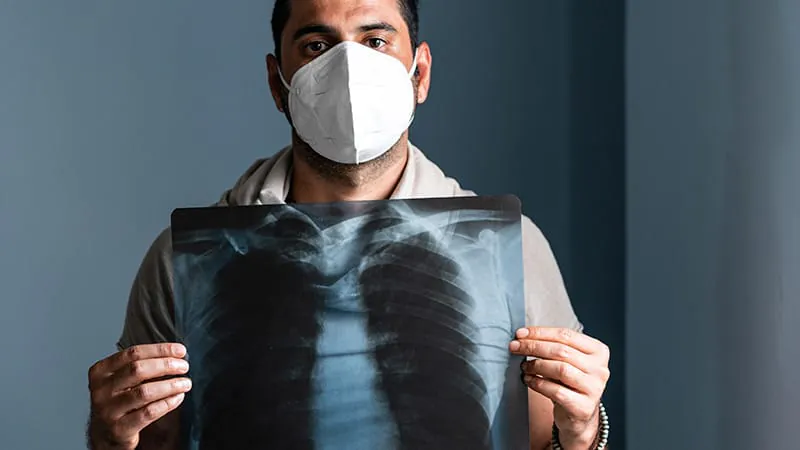
A five-year Dutch national screening program found tuberculosis (TB) in 276 per 100,000 asylum seekers — more than three times the rate seen in immigrants (79 per 100,000). Strikingly, nearly three-quarters of pulmonary TB cases had no cough symptoms, underscoring the value of systematic screening. Researchers say targeted migrant screening is essential for TB elimination in low-incidence countries.
A large Dutch national screening program covering over 149,000 migrants between 2019 and 2023 has revealed a stark disparity in tuberculosis (TB) detection rates between asylum seekers and immigrants. Asylum seekers were diagnosed with TB at a rate of 276 per 100,000 screened — more than three times the 79 per 100,000 rate seen among immigrants. The findings, published in The Lancet Regional Health – Europe, reinforce the critical role of systematic, targeted screening in countries where TB is otherwise rare.
One of the study's most striking findings: only 27.2% of pulmonary TB cases reported a cough — a classic symptom typically used to flag potential TB. This means relying on symptoms alone would have missed nearly three-quarters of cases. Treatment completion was also notably higher among immigrants (92.8%) than asylum seekers (81.2%), pointing to potential gaps in care continuity for the latter group.
By the Numbers
Why it matters: With TB elimination a global health goal, this study shows that symptom-based screening alone is insufficient and that asylum seekers represent a high-risk group requiring dedicated, entry-point screening strategies.