Curie Brief
Turn on cookies to sign in
Signing in saves your progress to your Curie account. We can only do that with cookies on — turn them on to continue.
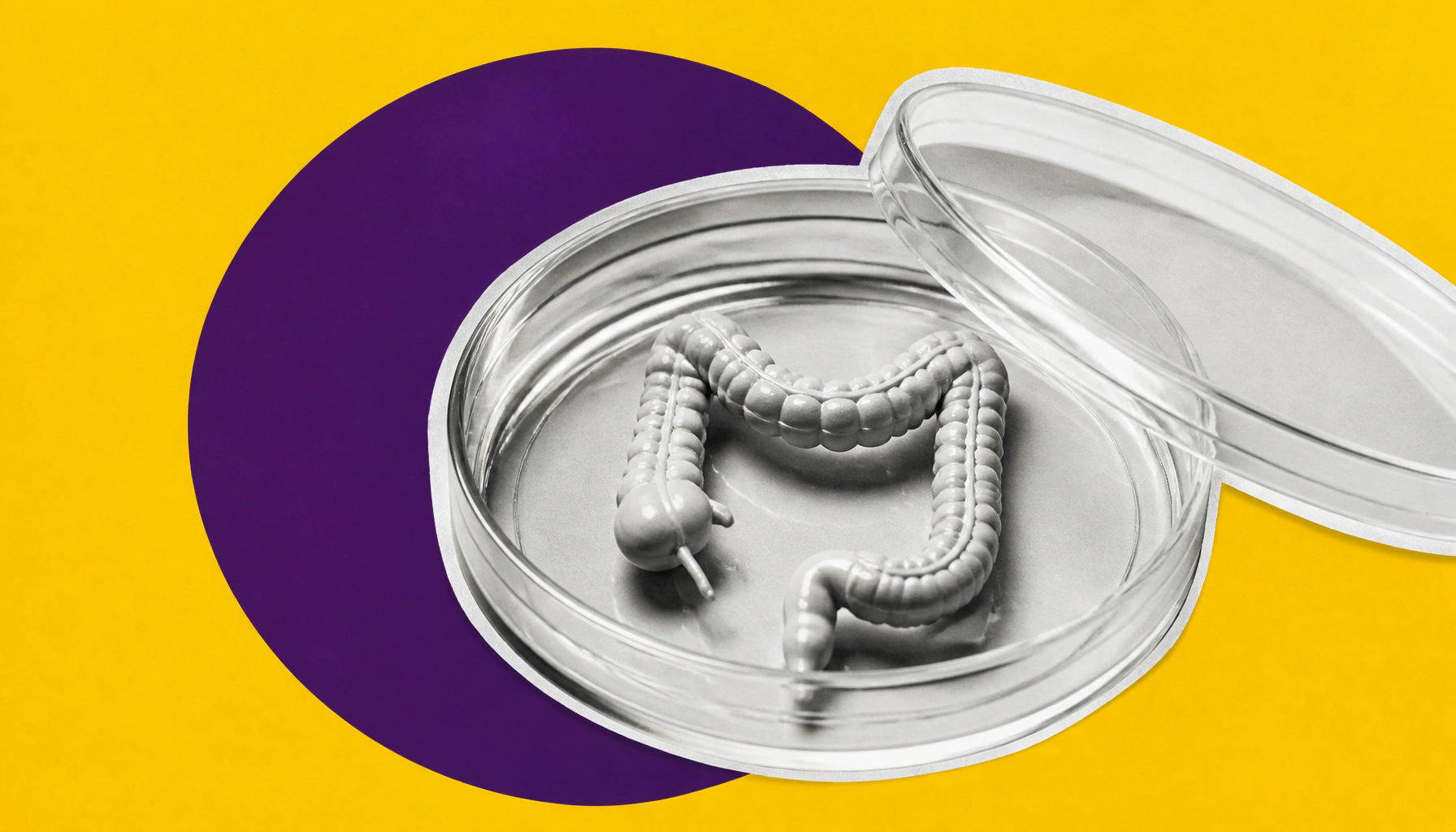
Even when IBD patients feel fine, their gut cells may still be quietly primed to fail. Researchers at WEHI and the Royal Melbourne Hospital discovered a hidden molecular defect — involving abnormal cell death — that persists even in remission and may help predict future flare-ups. The findings, published in Science, could pave the way for more personalized IBD monitoring and treatment.
Even when IBD patients feel perfectly fine, something troubling may still be brewing beneath the surface. Researchers at WEHI and the Royal Melbourne Hospital have identified a "smoldering" molecular defect in intestinal cells that remains active even during remission — and could help explain why patients with Crohn's disease or ulcerative colitis experience sudden, sometimes severe flare-ups out of nowhere. The findings were published in Science.
The team analyzed roughly 900 gut biopsies from 80 patients and grew patient-derived mini-intestines (organoids) in the lab to study the disease in human cells — rather than mouse models, which often fall short of mimicking human IBD. They found that intestinal cells in IBD patients are unusually "primed to die," a defect detectable even in those with mild or well-controlled disease. Patients with stronger cell death signaling were more likely to relapse over a two-year follow-up period.
Key Takeaways
Why it matters: This research lays the groundwork for more sensitive prognostic tools that could help clinicians identify which IBD patients are most at risk of relapse — and potentially match treatments to individual disease biology before the next flare hits.