Curie Brief
Turn on cookies to sign in
Signing in saves your progress to your Curie account. We can only do that with cookies on — turn them on to continue.
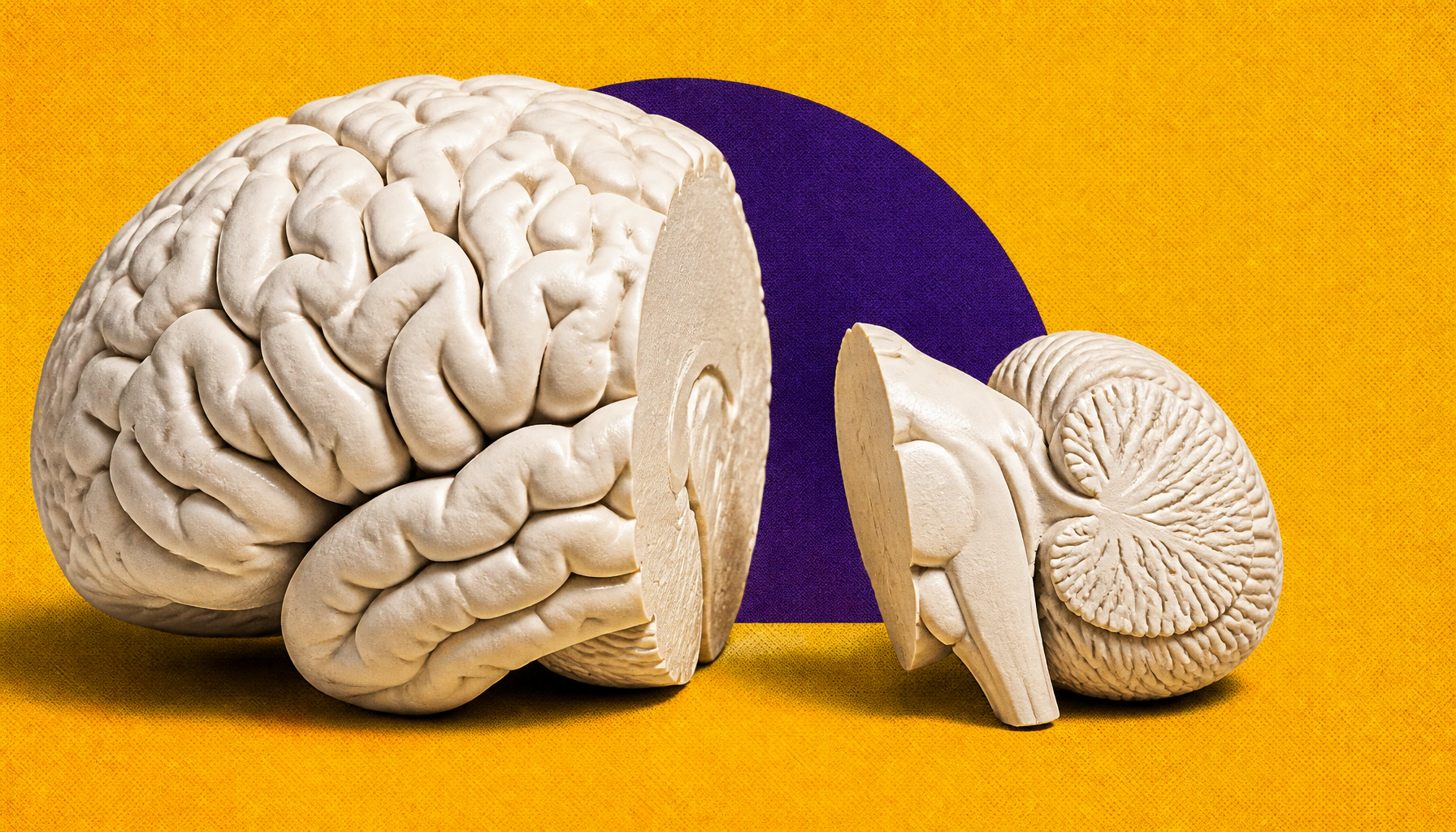
Stanford researchers have upended a long-held belief in neuroscience: the brain isn't one organ — it's two, with separate evolutionary and developmental origins. The forebrain and hindbrain arise from entirely distinct progenitor cells, a finding that also unlocks the ability to grow hindbrain neurons in the lab for the first time, opening new doors for studying ALS and spinal muscular atrophy.
For centuries, scientists assumed the brain was a single, unified organ with one common developmental origin. A landmark study from Stanford Medicine, published in Nature Neuroscience, turns that idea on its head — revealing that the human brain is actually two ancient nervous systems packaged together, each with its own distinct progenitor cell and evolutionary history.
The team found that the forebrain and midbrain arise from cells expressing the gene Otx2, while the hindbrain — which controls breathing, heartbeat, swallowing, and facial muscles — develops from a completely separate lineage expressing Gbx2. These two cell populations never overlap, have fundamentally different DNA configurations, and trace back over 550 million years of evolution, even appearing in acorn worms and jellyfish.
This discovery explains why scientists have struggled for decades to grow hindbrain neurons in the lab — they were trying to coax the wrong progenitor cells. Now, for the first time, the team successfully generated functional hindbrain motor neurons from human stem cells.
Key Takeaways:
Why it matters: Being able to grow hindbrain neurons in a dish gives researchers an unprecedented tool to study ALS, SMA, and other brainstem diseases — conditions that have been nearly impossible to investigate without access to living tissue. This could accelerate the path to regenerative therapies for some of neurology's most devastating disorders.