Curie Brief
Turn on cookies to sign in
Signing in saves your progress to your Curie account. We can only do that with cookies on — turn them on to continue.
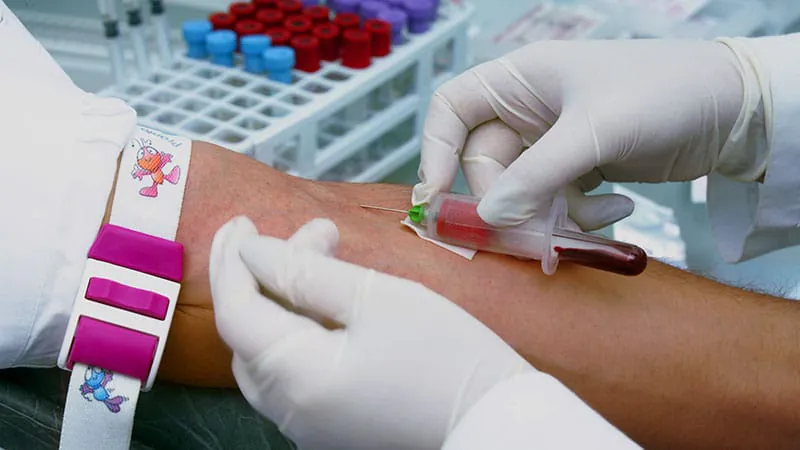
Blood tests for food allergies are getting smarter, but experts say none can yet replace the oral food challenge. While newer tests like BAT and MAT show promise for accuracy, logistical hurdles and limited validation keep them out of routine practice. The oral food challenge remains the only tool that answers the most critical question: not just if someone is allergic, but how allergic they are.
Blood tests for food allergies have come a long way — but not far enough to dethrone the oral food challenge. Despite advances in component testing and newer cellular assays like the basophil activation test (BAT) and mast cell activation test (MAT), leading allergists say the diagnostic picture hasn't changed dramatically in a decade. The core problem: a positive IgE blood test doesn't reliably confirm true clinical allergy, leaving a large "gray zone" that only a supervised food challenge can resolve.
The newer tests are more promising. MAT, which uses stored serum rather than fresh blood, showed 93% sensitivity and 96% specificity for peanut allergy in a study of 112 children — and correctly classified every BAT non-responder. BAT is already included in European guidelines for equivocal peanut and sesame cases, but its requirement for same-day blood processing makes it impractical for most clinics. Beyond diagnostics, experts argue the oral food challenge offers something no blood test can replicate: a measurable psychological benefit, with research showing quality of life improves after a well-conducted challenge — even when a reaction occurs.
Key Takeaways:
Why it matters: As food allergy treatment shifts from avoidance to active therapies, accurate diagnosis is more critical than ever. Better blood tests could reduce unnecessary and burdensome food challenges, but until they're validated and scalable, the oral food challenge remains irreplaceable.