Curie Brief
Turn on cookies to sign in
Signing in saves your progress to your Curie account. We can only do that with cookies on — turn them on to continue.
A novel CAR T-cell therapy gets its shot at tackling progressive MS. The FDA has cleared AbelZeta Pharma's phase 1b/2 trial of C-CAR168, a bispecific CAR T-cell therapy targeting CD20 and BCMA, for patients with progressive multiple sclerosis who haven't responded to standard treatments. Early data from two SPMS patients showed improvements in gait, neurologic function, and reductions in brain inflammation.
A new frontier for progressive MS treatment
The FDA has cleared AbelZeta Pharma's investigational new drug application for a phase 1b/2 trial of C-CAR168 — an autologous bispecific CAR T-cell therapy — in patients with progressive multiple sclerosis (MS) refractory to standard care. The therapy simultaneously targets CD20 and B-cell maturation antigen (BCMA), aiming to deplete the B cells and plasma cells that drive autoimmune damage. Unlike conventional MS drugs, C-CAR168 uses a patient's own engineered T cells for what the company hopes will be a more durable immune "reset."
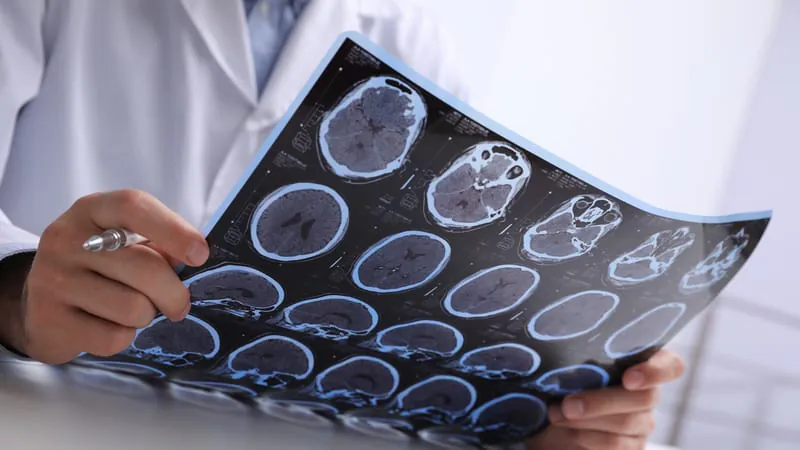
The trial will enroll patients with secondary progressive MS (SPMS) or primary progressive MS (PPMS). Early phase 1 data from two SPMS patients — one with over a year of follow-up — showed promising improvements in gait, neurologic function, and reductions in brain lesion size and inflammation.
By the Numbers
Why it matters: Progressive MS causes irreversible neurological disability with very limited treatment options, especially when active inflammation is absent. A CAR T-cell approach that resets the immune system — rather than suppressing it repeatedly — could represent a meaningful shift in how this difficult-to-treat condition is managed.