Curie Brief
Turn on cookies to sign in
Signing in saves your progress to your Curie account. We can only do that with cookies on — turn them on to continue.
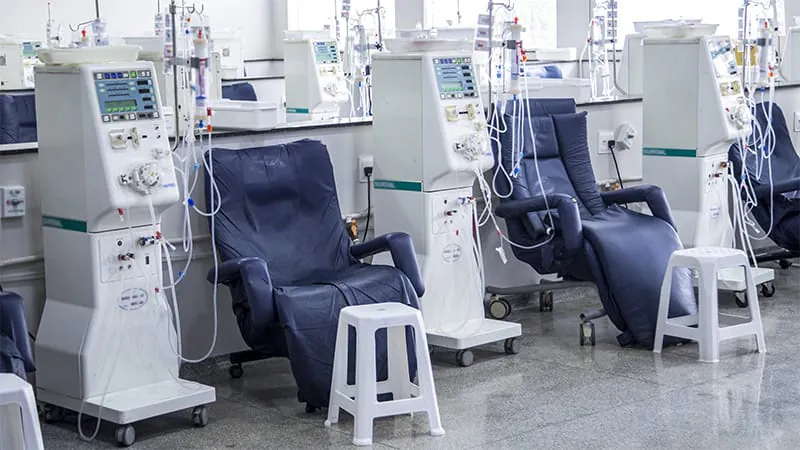
Falls are surprisingly common among haemodialysis patients, with 40% experiencing at least one fall over a year — and nearly three-quarters of those happening at home. A history of falls and longer time on dialysis were the strongest independent risk factors. Notably, a frailty index outperformed the traditional fall risk scale in predicting who's most at risk.
Falls are a serious and underappreciated hazard for patients on haemodialysis. A new prospective Spanish study tracking 102 dialysis patients over 12 months found that 40% experienced at least one fall, with an overall rate of 1.45 falls per patient-year. Most falls — nearly 75% — happened at home, and about half occurred on non-dialysis days, suggesting the risk extends well beyond the clinic.
The strongest predictors of falling were a prior history of falls and a longer cumulative time on dialysis. Use of CNS depressant drugs and beta-blockers also raised the odds. Importantly, the study found that a multidimensional frailty index (IF-VIG) was significantly better at identifying high-risk patients than the commonly used Downton fall risk scale.
By the Numbers:
Why it matters: Haemodialysis patients are an aging, frail population who spend most of their time outside the clinic — making home-based fall prevention critical. These findings call for routine frailty screening and fall history checks in dialysis units to better protect a highly vulnerable group.