Curie Brief
Turn on cookies to sign in
Signing in saves your progress to your Curie account. We can only do that with cookies on — turn them on to continue.
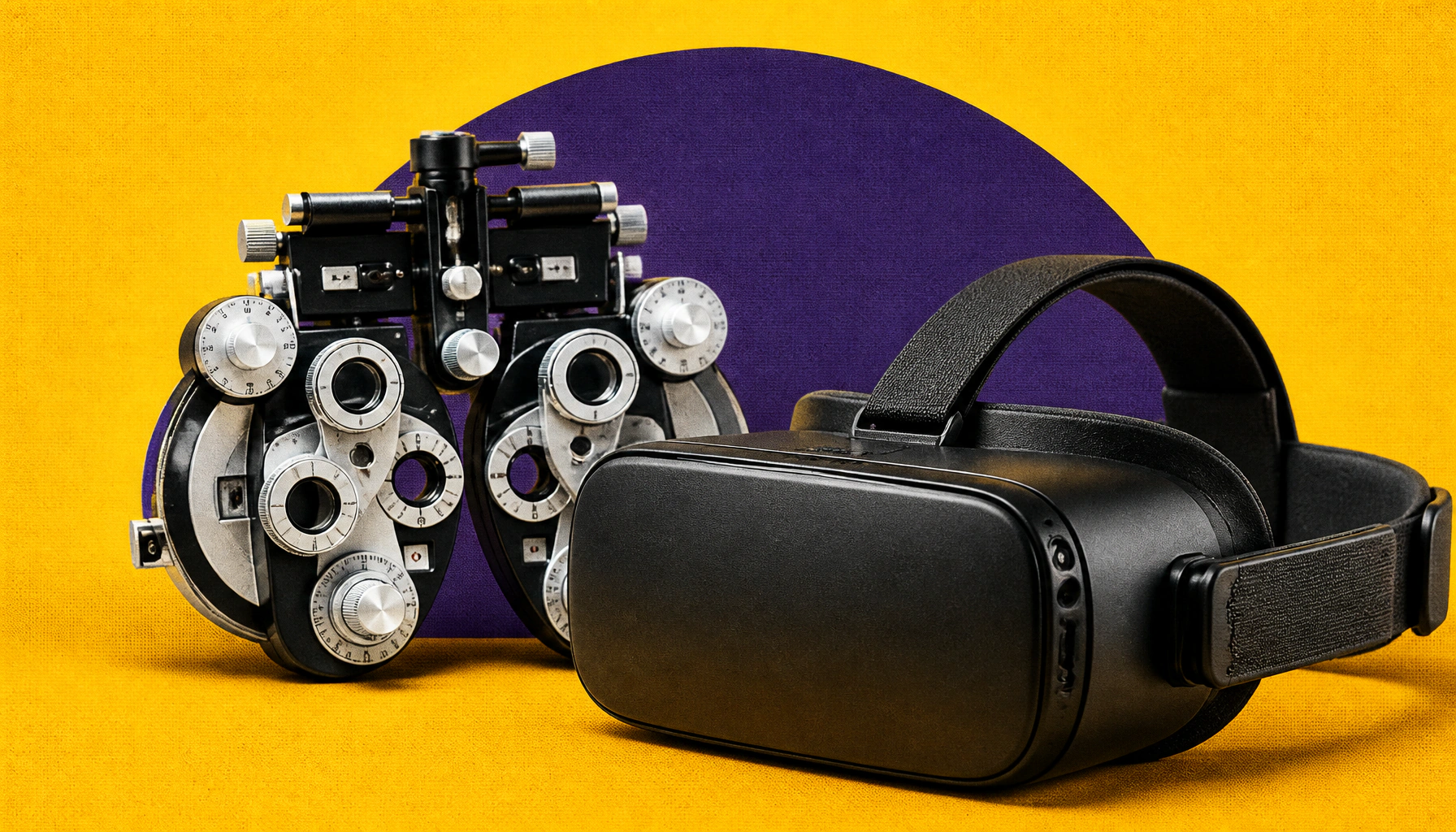
Eye exams just got a tech upgrade. Heru has launched PretestPro, a VR-powered software that guides patients through four standard eye pretests — visual field, extraocular motility, pupillometry, and near cover — in under two minutes. The tool aims to replace subjective, clinician-dependent assessments with consistent, quantitative, recorded measurements that can be tracked visit over visit.
Eye exams just got a tech upgrade. Heru has launched PretestPro in the U.S., a software platform running on its virtual reality-powered Heru Prime headset that guides patients through four standard eye pretests in less than two minutes. The tests include an eight-point suprathreshold visual field test, a near cover test, extraocular motility, and quantitative pupillometry — including detection of relative afferent pupillary defect (RAPD).
The big pitch? Consistency. Traditional pretesting often depends on a clinician's subjective assessment, meaning results can vary based on who performs the test. PretestPro produces standardized, quantitative measurements recorded the same way for every patient — and those values stay in the record for easy comparison at future visits. Early adopters in clinical practice report significant time savings, and studies at Bascom Palmer Eye Institute showed PretestPro results correlated well with those of expert examiners.
Key Takeaways:
Why it matters: Streamlining pretesting without sacrificing accuracy could help eye care practices see more patients efficiently — and may surface glaucoma suspects or other at-risk patients who might otherwise be missed during routine exams.