Curie Brief
Turn on cookies to sign in
Signing in saves your progress to your Curie account. We can only do that with cookies on — turn them on to continue.
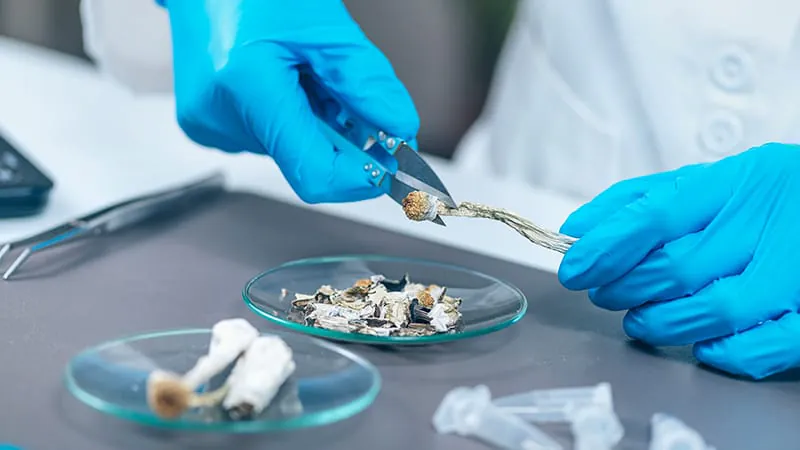
Could a magic mushroom compound protect cancer patients' nerves? Preclinical research published in Science found that psilocybin — the active compound in psychedelic mushrooms — prevented chemotherapy-induced peripheral neuropathy (CIPN) in mouse models and showed supporting evidence in human nerve tissue. The effect works by preserving mitochondrial transport in sensory axons, and notably, a non-hallucinogenic version of the drug offered similar protection.
Could a magic mushroom compound protect cancer patients' nerves?
Chemotherapy-induced peripheral neuropathy (CIPN) — a painful, often debilitating side effect affecting up to 60% of patients on platinum-based chemo — has no approved preventive treatment. Now, a preclinical study published in Science suggests psilocybin, the psychedelic compound found in "magic mushrooms," may change that. Researchers at MD Anderson Cancer Center found that just two prophylactic doses of psilocybin fully prevented mechanical hypersensitivity in cisplatin-treated mice, with protection lasting over 8 months across six chemotherapy cycles — and without affecting tumor growth.
The mechanism is surprisingly peripheral: rather than acting solely on the brain, psilocybin preserves mitochondrial transport along sensory axons, keeping energy (ATP) available in the nerve endings most vulnerable to chemo damage. This effect was confirmed in human-derived sensory neurons and freshly harvested peripheral nerves from surgical patients. Crucially, a non-hallucinogenic 5-HT2A receptor agonist called tabernanthalog offered comparable protection — suggesting the psychedelic effects aren't what's driving the neuroprotection.
Key Takeaways:
Why it matters: CIPN can force dose reductions or early termination of life-saving cancer treatment. A preventive therapy — especially one that may not require psychedelic effects — could represent a meaningful advance in oncology care.