Curie Brief
Turn on cookies to sign in
Signing in saves your progress to your Curie account. We can only do that with cookies on — turn them on to continue.
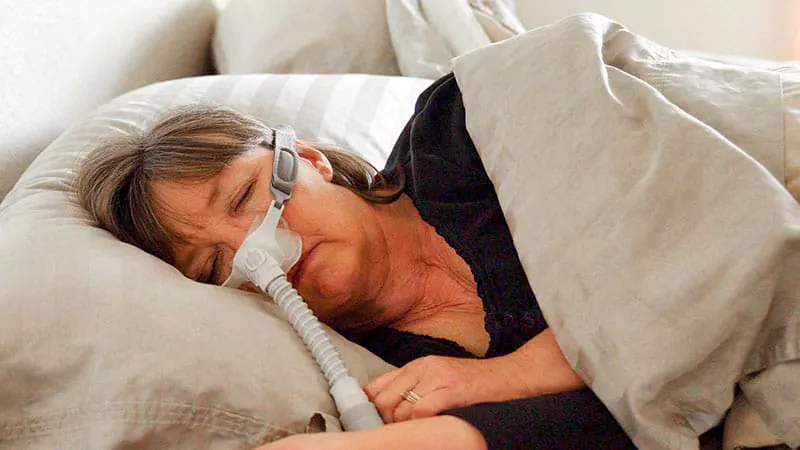
Not all sleep apnea patients get the same heart-health payoff from PAP therapy — but two biomarkers may change that. A large study found that patients with high hypoxic burden or elevated heart rate response during sleep events saw nearly 19 fewer major cardiovascular events per 1,000 person-years when they stuck with PAP therapy. The findings could pave the way for more personalized, targeted treatment approaches.
For years, clinicians have debated how much PAP (positive airway pressure) therapy actually moves the needle on cardiovascular outcomes in sleep apnea patients. A new large study suggests the answer may depend on the patient's underlying risk profile — and two biomarkers could help identify who's most likely to benefit.
Researchers analyzed data from 3,370 French patients with moderate-to-severe obstructive sleep apnea (OSA) over a median follow-up of 9 years. They found that combining sleep apnea-specific hypoxic burden (SASHB) and event-related heart rate response (eHR) effectively stratified patients into high- and low-risk groups for major adverse cardiovascular events (MACEs).
By the Numbers:
Why it matters: These findings suggest that a one-size-fits-all approach to PAP therapy may be leaving high-risk patients under-supported. Biomarker-guided risk stratification could help clinicians prioritize intensive adherence programs and closer cardiovascular monitoring for those who stand to gain the most.