Curie Brief
Turn on cookies to sign in
Signing in saves your progress to your Curie account. We can only do that with cookies on — turn them on to continue.
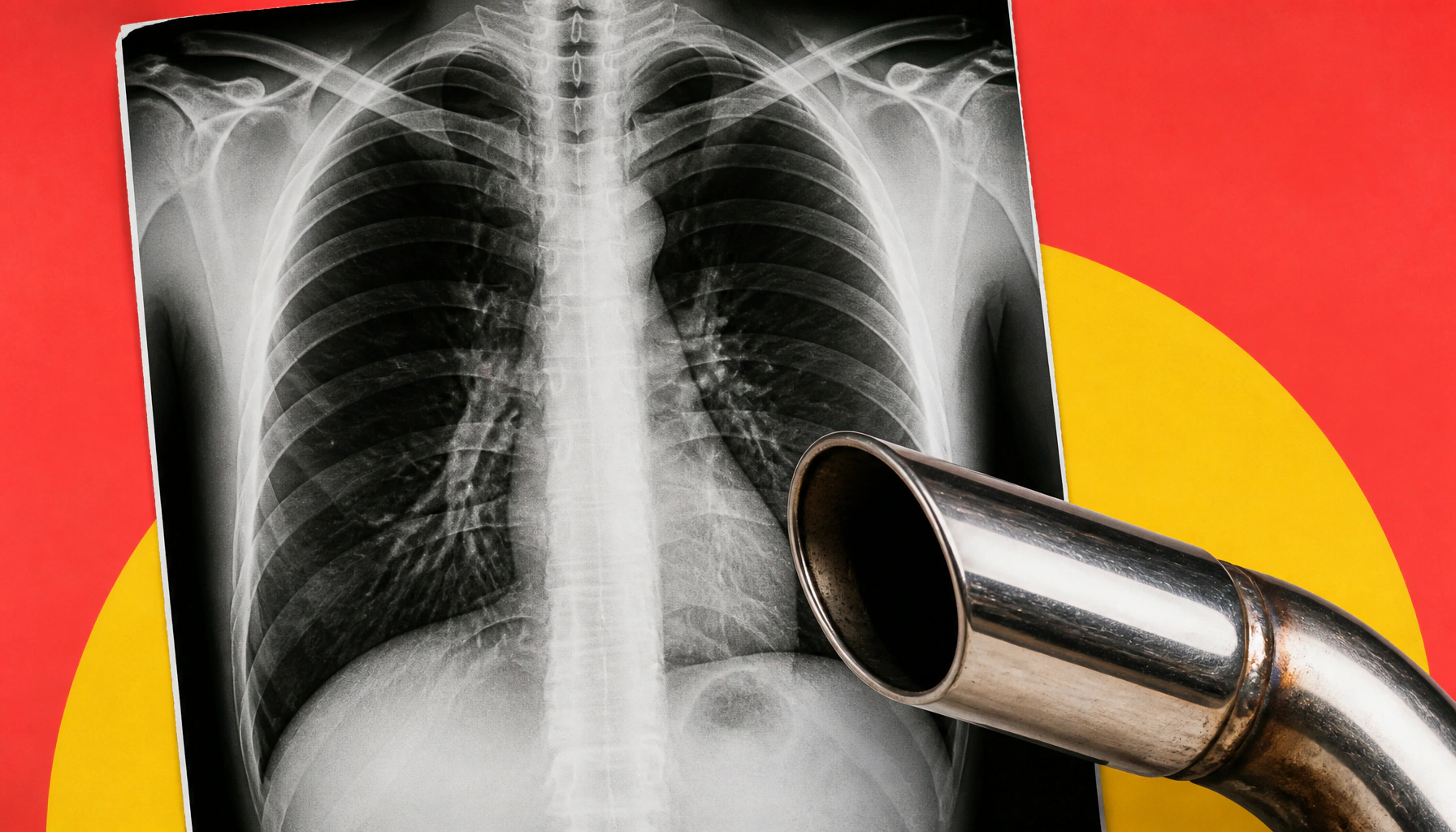
Air pollution isn't just a lung cancer risk factor — it may also shorten survival after diagnosis. A new international study found that higher exposure to fine particulate matter (PM2.5) and nitrogen dioxide (NO2) was linked to worse 5-year survival in lung cancer patients in Canada and the UK. Notably, nonsmokers appeared more vulnerable to pollution's deadly effects than current or former smokers.
Air pollution doesn't just raise your risk of getting lung cancer — it may also cut your chances of surviving it. Researchers presenting at the 2026 World Conference on Lung Cancer (WCLC) in Seoul analyzed data from over 6,200 lung cancer patients across Canada, the US, and the UK, finding that higher ambient levels of PM2.5 and NO2 were significantly associated with increased 5-year mortality — particularly in Canadian and UK cohorts.
One striking finding: nonsmokers appeared more sensitive to pollution's impact on survival than current or former smokers, suggesting that air quality may be an especially critical prognostic factor for those who never smoked. Researchers also noted a nonlinear risk pattern in the UK, where even modest PM2.5 levels above WHO guidelines (between 7–10 μg/m³) were tied to higher mortality risk.
By the Numbers:
Why it matters: These findings suggest that environmental exposure should be factored into lung cancer prognosis — not just smoking history. Adding air quality metrics to clinical risk models could improve survival predictions and help identify high-risk patients who may need more aggressive monitoring or intervention.