Curie Brief
Turn on cookies to sign in
Signing in saves your progress to your Curie account. We can only do that with cookies on — turn them on to continue.
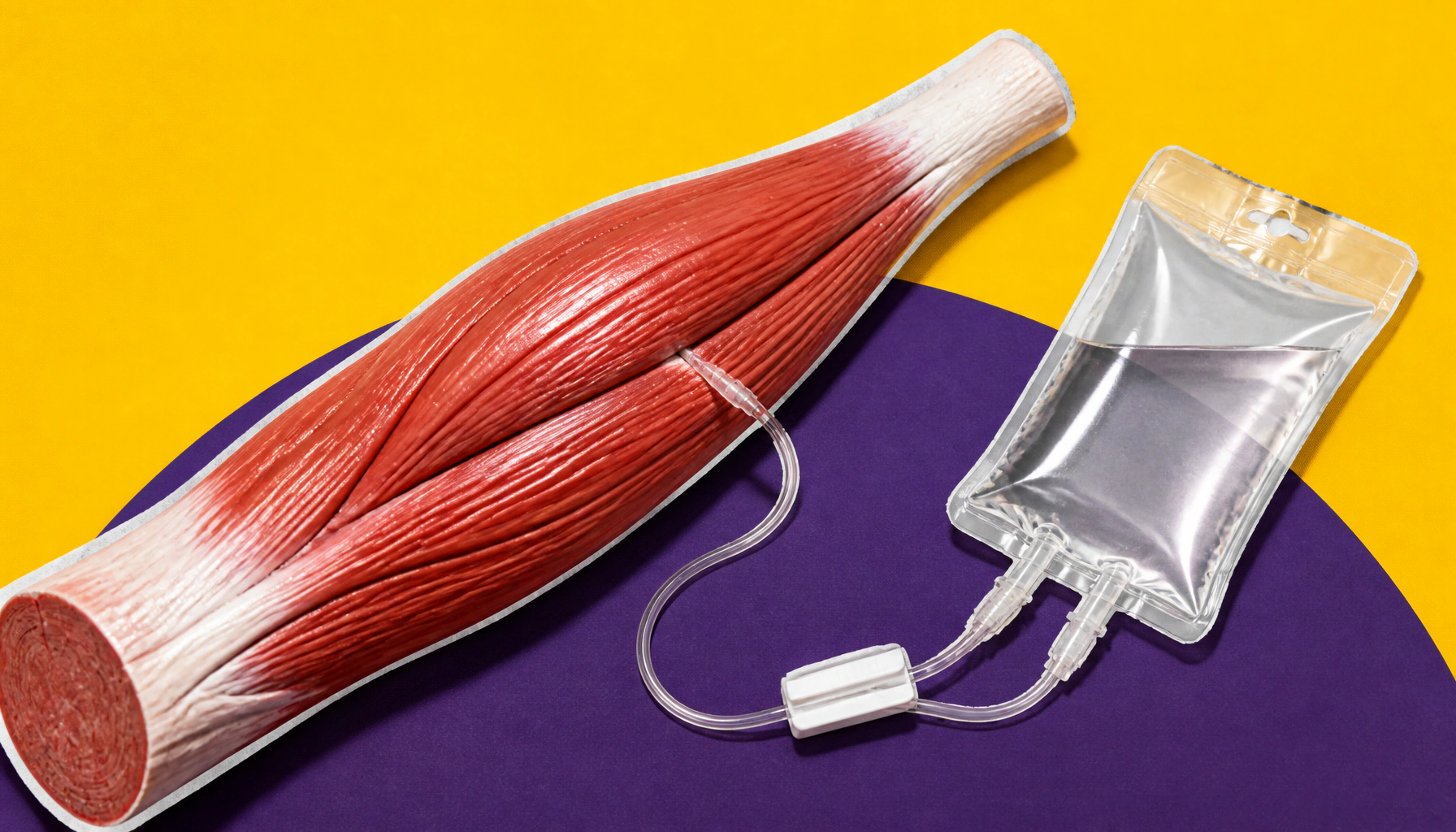
The FDA has approved Isembyld (apitegromab-mstn), the first therapy for spinal muscular atrophy (SMA) to directly target muscle loss rather than motor neurons. Approved for adults and children aged 2 and older, it works as an add-on to existing SMN2-targeted treatments. In the pivotal SAPPHIRE trial, patients on Isembyld gained motor function while those on placebo declined.
The FDA has approved Isembyld (apitegromab-mstn, Scholar Rock), marking a landmark moment in the treatment of spinal muscular atrophy (SMA). Unlike existing therapies that target motor neuron survival, Isembyld is the first to directly address muscle loss — the other half of SMA's devastating equation. It's approved as an add-on therapy for adults and children aged 2 and older who are already on an SMN2-targeted treatment like nusinersen or risdiplam.
Isembyld works by binding to promyostatin and latent myostatin, blocking the activation of myostatin — a protein that normally suppresses skeletal muscle growth. The approval was based on the phase 3 SAPPHIRE trial, a randomized, double-blind, placebo-controlled study of 188 patients with nonambulatory type 2 or type 3 SMA. After 52 weeks, patients on the approved 10 mg/kg dose saw meaningful motor function gains while the placebo group declined. The drug is administered via IV infusion every 4 weeks in hospitals, infusion centers, or at home.
By the Numbers:
Why it matters: SMA has long been treated by targeting motor neuron survival, but muscle function remained a gap. Isembyld fills that gap, offering patients and families a new avenue to not just slow decline — but actually gain motor function. Scholar Rock has also launched a patient support program to help navigate insurance and financial barriers.