Curie Brief
Turn on cookies to sign in
Signing in saves your progress to your Curie account. We can only do that with cookies on — turn them on to continue.
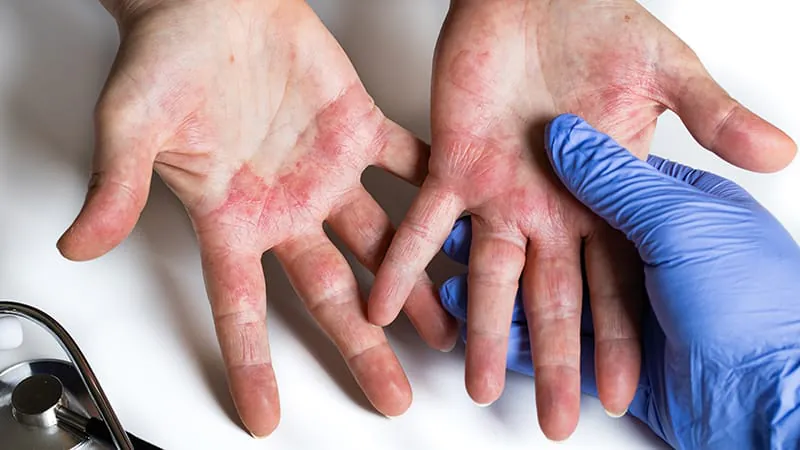
When eczema won't budge, think harder — not just harder treatments. The American Academy of Dermatology has released its first-ever guidelines for adults with treatment-refractory atopic dermatitis (AD), urging clinicians to reassess the diagnosis before escalating therapy. The guidelines highlight mimicking conditions, comorbidities, and treatment barriers as key factors to investigate when standard AD treatments fail.
The American Academy of Dermatology (AAD) has published its first-ever guidelines for adults whose atopic dermatitis (AD) doesn't respond to treatment — and the core message is surprisingly simple: don't just escalate therapy. Instead, clinicians should pause and ask why the treatment isn't working.
The guidelines, published in the Journal of the American Academy of Dermatology, emphasize that treatment failure could signal a misdiagnosis, an overlooked comorbidity, or a barrier to adherence — not necessarily true refractory AD. Conditions like contact dermatitis, psoriasis, cutaneous T-cell lymphoma, food allergies, and allergic rhinitis can all mimic or worsen AD, complicating the clinical picture.
A targeted diagnostic workup — including patch testing, skin biopsy, bacterial culture, and skin scrapings — is recommended based on each patient's specific presentation, history, and treatment response. Notably, there is no single confirmatory test for AD.
Key Takeaways:
Why it matters: With approximately 2% of adults worldwide affected by AD — and adult-onset cases on the rise — these guidelines give clinicians a practical framework to avoid unnecessary therapy escalation and improve outcomes through smarter, more individualized diagnosis.