Curie Brief
Turn on cookies to sign in
Signing in saves your progress to your Curie account. We can only do that with cookies on — turn them on to continue.
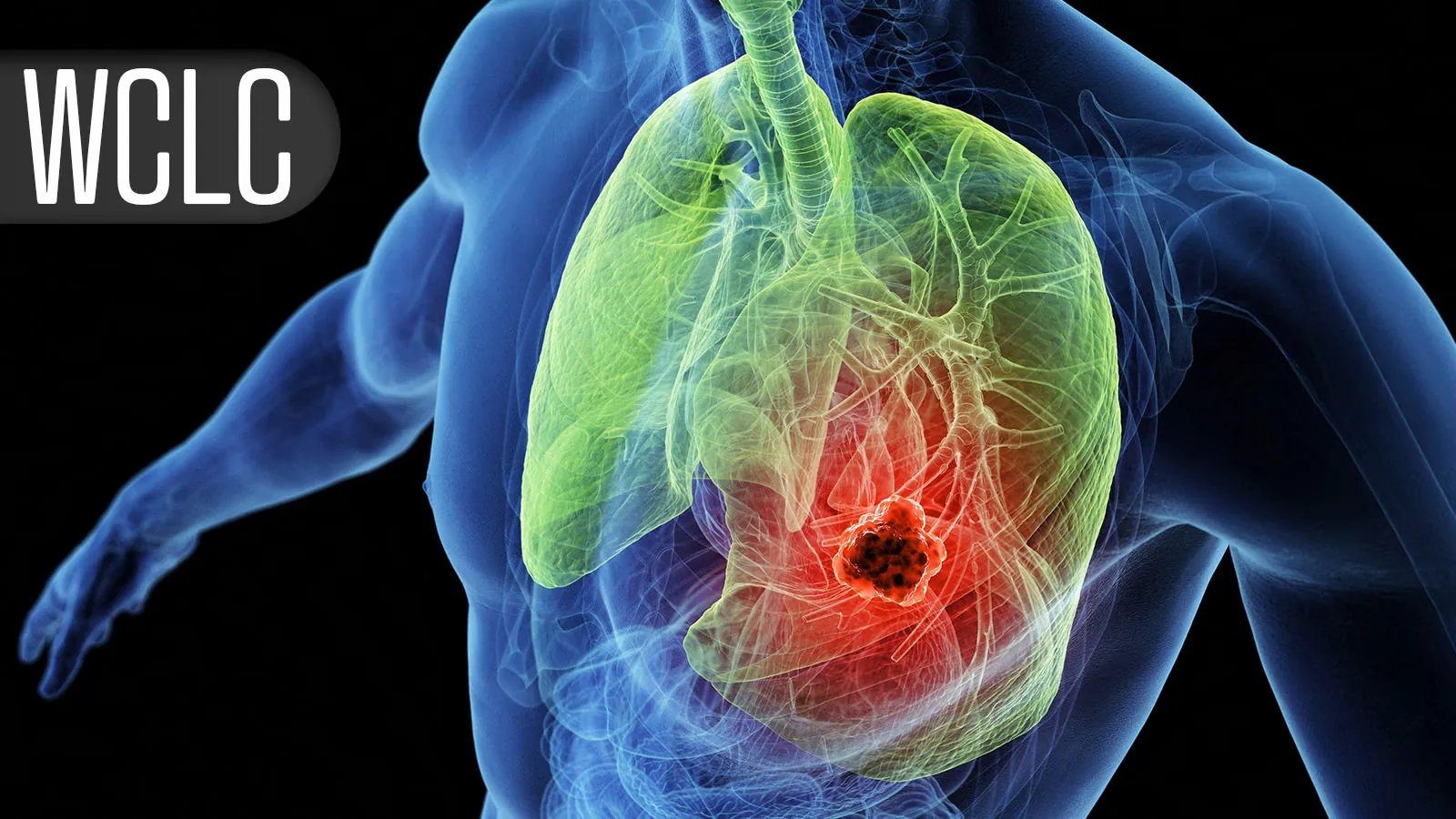
Two phase III trials found that investigational antibody-drug conjugates tambotatug pelitecan and risvutatug rezetecan each cut the risk of death by 54% compared to standard chemotherapy in relapsed small-cell lung cancer. Both drugs also dramatically improved progression-free survival and response rates, signaling a potential new standard of care in a notoriously hard-to-treat cancer.
Small-cell lung cancer (SCLC) just got a major treatment shake-up. Two phase III trials presented at the World Conference on Lung Cancer in Seoul revealed that a pair of anti-B7-H3 antibody-drug conjugates (ADCs) — tambotatug pelitecan (Tam-Peli) and risvutatug rezetecan (Ris-Rez) — each reduced the risk of death by 54% compared to topotecan, the current standard second-line chemotherapy, in patients with relapsed SCLC.
In the TAISHAN-302 trial, Tam-Peli delivered a median overall survival (OS) of 13.3 months vs. 9.4 months with topotecan. The ARTEMIS-008 trial showed an even more striking result with Ris-Rez: 18.5 months vs. 10.3 months. Both drugs also showed far superior progression-free survival and objective response rates. Results were simultaneously published in the New England Journal of Medicine.
Why it matters: Experts are calling this a turning point for relapsed SCLC, a disease with historically grim outcomes and limited options. With a third B7-H3-targeting ADC already under FDA priority review, clinicians may soon have multiple potent alternatives to chemotherapy — and within 2–5 years, ADCs could become the new second-line standard, potentially even replacing chemo in the front-line setting.