Loading Curie Briefs...
Getting the latest healthcare news for you
Getting the latest healthcare news for you

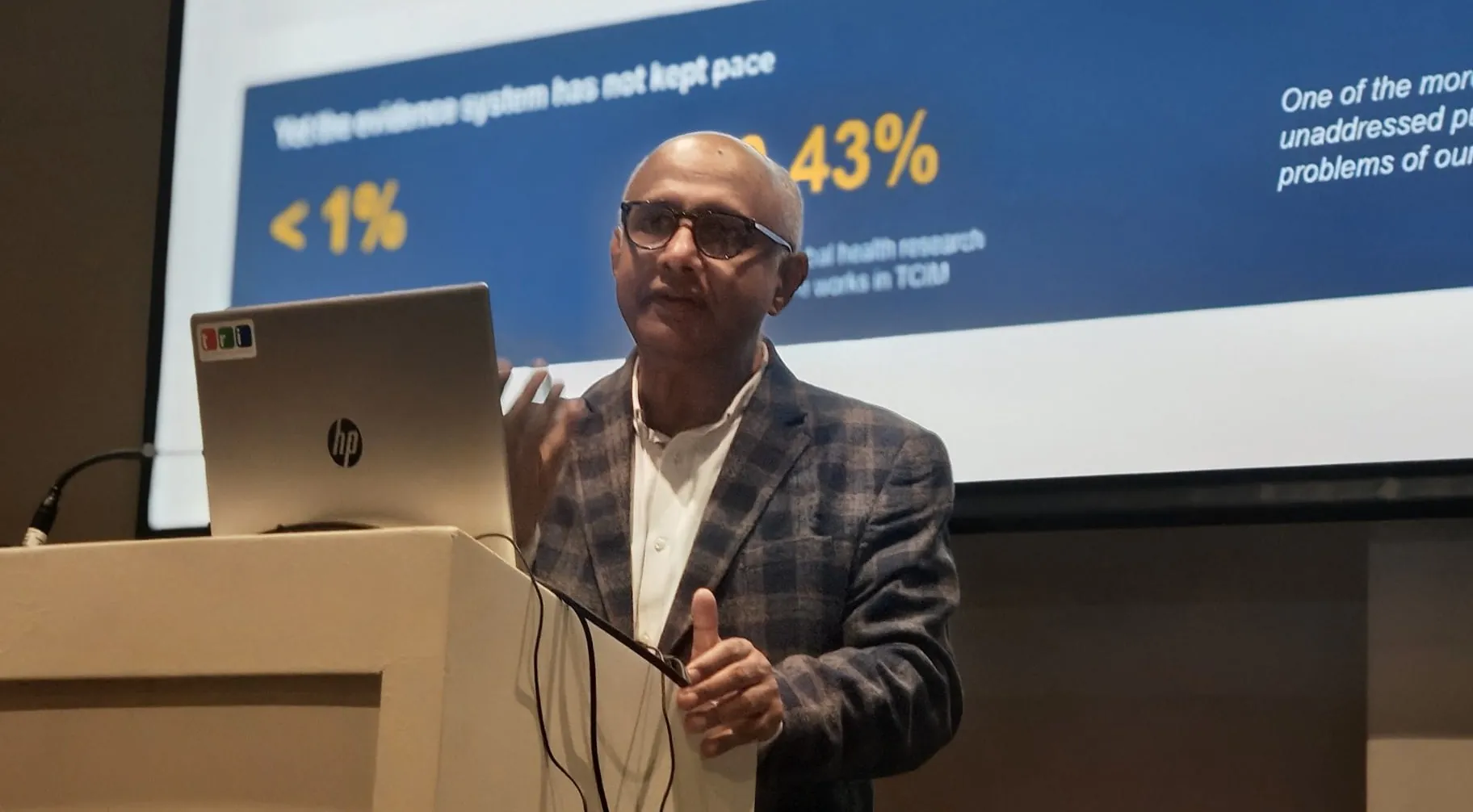
Traditional medicine is already a healthcare reality for billions — now WHO wants it backed by science and policy. At the World Congress on Public Health in Cape Town, experts gathered to advance the WHO Global Traditional Medicine Strategy 2025–2034, calling for stronger research, regulation, and integration of traditional, complementary, and integrative medicine (TCIM) into national health systems worldwide.
Traditional medicine isn't a fringe concern — it's the first point of care for a significant portion of the world's population. At the World Congress on Public Health (WCPH) in Cape Town, South Africa, global health leaders convened to chart a path forward for integrating traditional, complementary, and integrative medicine (TCIM) into mainstream health systems, guided by the newly adopted WHO Global Traditional Medicine Strategy 2025–2034.
Experts flagged a glaring mismatch: while most WHO Member States report widespread use of traditional medicine, research investment remains far behind. A major WHO global priority-setting exercise identified key areas where TCIM research could have the greatest public health impact — from mental health and pain management to cancer and metabolic disorders — alongside emerging cross-cutting issues like climate resilience and antimicrobial resistance.
Key Takeaways:
Why it matters: With billions relying on traditional medicine daily, leaving it unregulated and under-researched poses a real public health risk. The WHO strategy signals a global commitment to making TCIM safer, more evidence-based, and genuinely integrated — not just tolerated — within health systems.