Loading Curie Briefs...
Getting the latest healthcare news for you
Getting the latest healthcare news for you

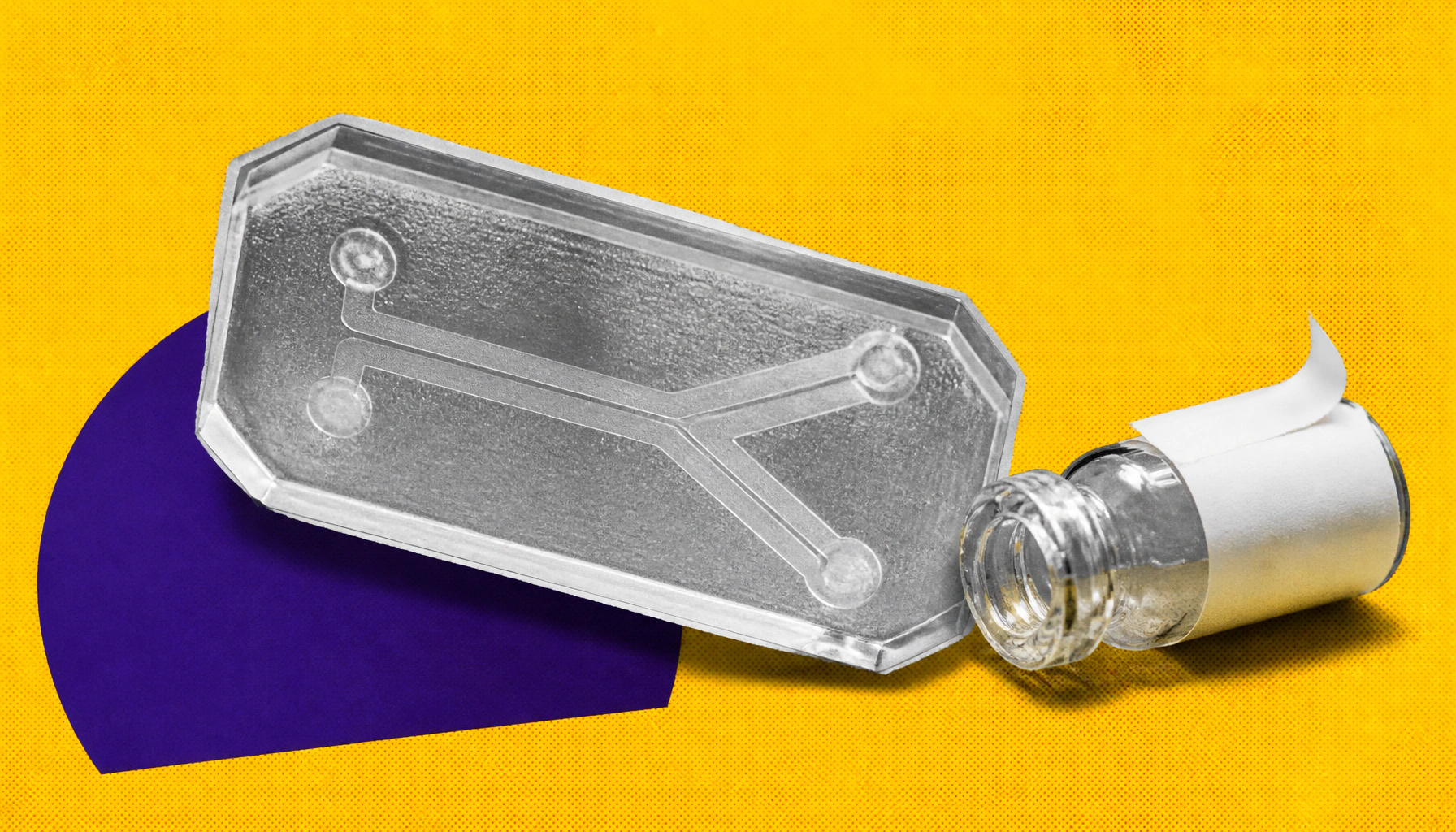
A new microfluidic chip developed by RIKEN researchers uses laser fabrication and deep learning to identify and sort cancer cells with 96.2% accuracy — without any chemical labels or biomarkers. The chip leverages surface-enhanced Raman scattering (SERS) technology with ultra-high spatial resolution to distinguish cancer from non-cancer cells. The breakthrough could open doors to faster, non-invasive diagnostics and precision medicine applications.
Researchers at RIKEN in Japan have developed a cutting-edge microfluidic chip that can identify and sort cancer cells with remarkable precision — all without the need for chemical tags or biomarkers. The chip uses surface-enhanced Raman scattering (SERS) technology, fabricated via femtosecond laser processing, and pairs it with deep-learning algorithms to analyze the unique molecular "fingerprints" of individual cells.
The key innovation lies in the chip's plasmonic ring-shaped nanostructure arrays, which produce ultra-uniform Raman signal enhancement. This high spatial resolution (~185 nm) proved critical: boosting cell identification accuracy from 75% to 96.2%. In a proof-of-concept test, cancer and non-cancer cells were successfully separated through a "Y"-shaped microchannel — no labeling required.
Why it matters: Accurate, label-free cancer cell sorting is a major hurdle in precision medicine and early diagnostics. This chip could streamline the analysis of rare cancer cells — like circulating tumor cells — making non-invasive cancer detection faster and more accessible in clinical settings.