Loading Curie Briefs...
Getting the latest healthcare news for you
Getting the latest healthcare news for you

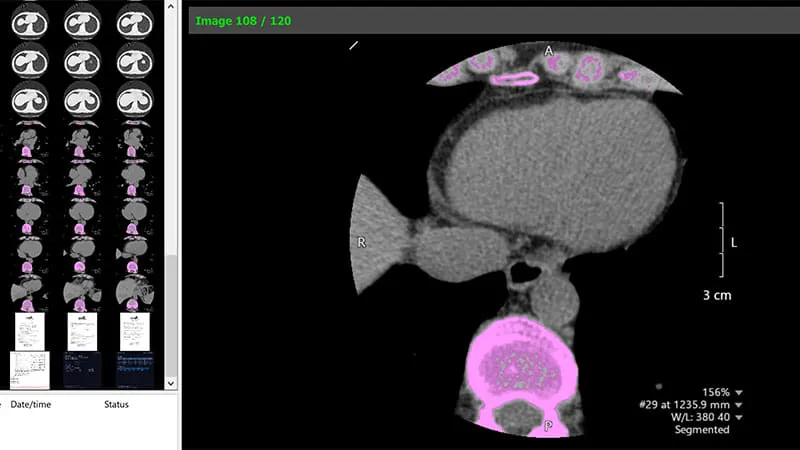
CAC scoring offers limited overall benefit when added to PREVENT-ASCVD risk equations, but shines brightest for patients in the borderline risk zone. A new JAMA study found that CAC scores helped correctly reclassify half of borderline-risk patients who went on to have a cardiovascular event. Experts say the smarter play is to calculate PREVENT risk first, then selectively use CAC for those in the gray zone.
Adding coronary artery calcium (CAC) scoring to the PREVENT-ASCVD risk equations only modestly improves overall cardiovascular risk prediction, according to a new study published in JAMA. Researchers analyzed data from over 6,000 adults in the Multi-Ethnic Study of Atherosclerosis (MESA) and found that while CAC did bump up predictive accuracy slightly, the real value lies in a specific group: those classified as borderline risk (3% to <5% 10-year ASCVD risk).
For borderline-risk adults, CAC scores told a dramatically different story depending on the result — 10-year ASCVD event rates ranged from just 1.9% in those with a CAC of 0 all the way to 14.3% in those with a CAC ≥300. This aligns with the 2026 ACC/AHA/Multisociety dyslipidemia guideline, which recommends selective CAC use when lipid-lowering therapy decisions remain uncertain.
By the Numbers
Why it matters: Clinicians may be ordering CAC scans too broadly. These findings reinforce a "PREVENT first, CAC second" approach — reserving the scan for patients where the treatment decision is genuinely uncertain, rather than applying it across the board.