Loading Curie Briefs...
Getting the latest healthcare news for you
Getting the latest healthcare news for you

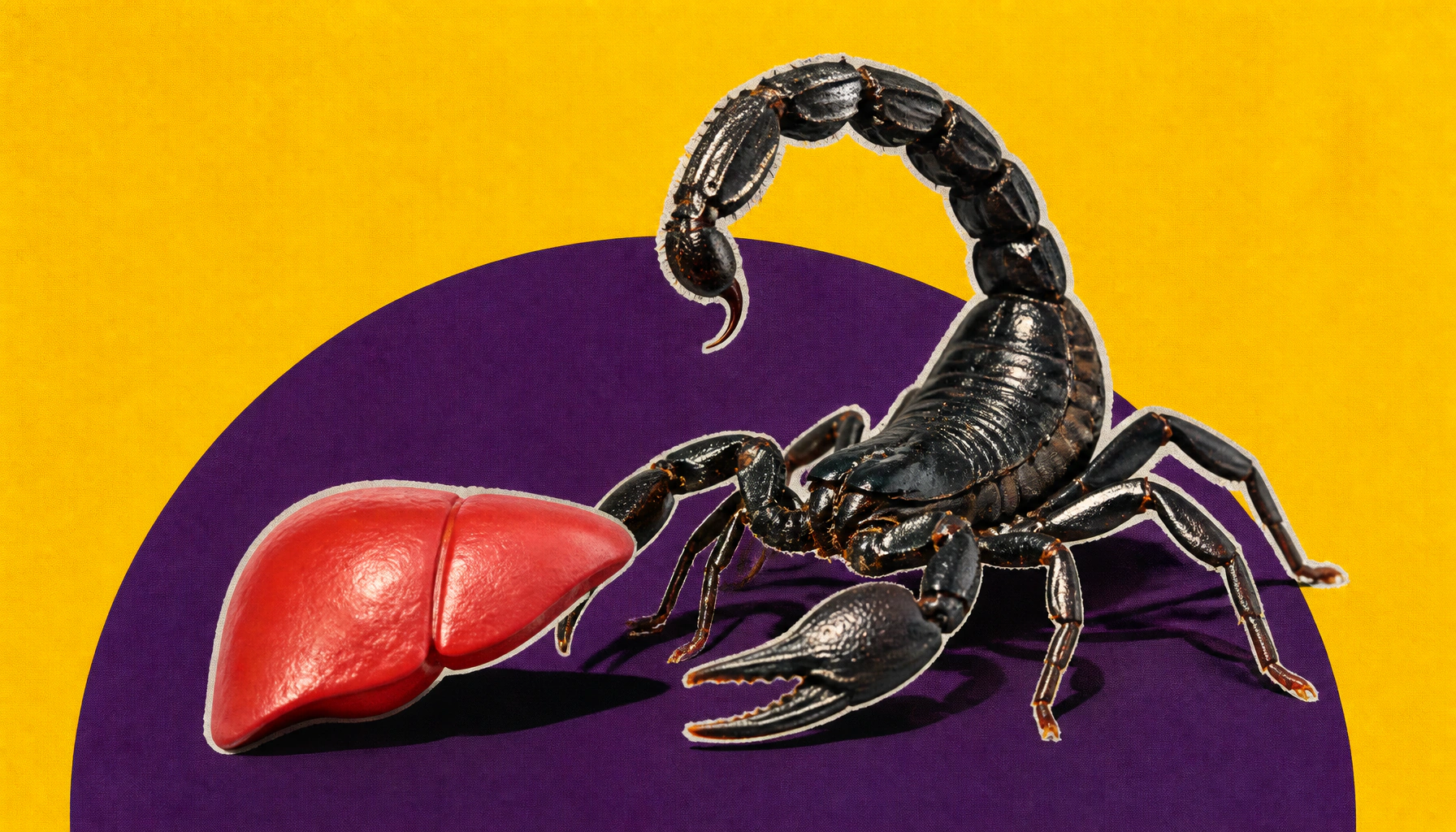
Scorpion venom's hidden healing potential: Researchers are exploring how peptides derived from scorpion venom could treat chronic liver disease and viral hepatitis. A review in iLIVER highlights compounds that block inflammatory pathways, fight hepatitis B and C viruses, and reduce liver scarring in animal models. While results are encouraging, significant hurdles — including poor drug stability and limited human data — remain before these become real therapies.
Scorpion venom has long been feared, but scientists are now eyeing it as a potential source of new medicines. A review published in the journal iLIVER takes stock of how peptides extracted from scorpion venom could be engineered into treatments for chronic liver diseases and viral hepatitis — conditions that affect hundreds of millions of people worldwide and still lack fully effective therapies.
The review identifies two main classes of venom peptides: disulfide-bridged peptides (DBPs), which are structurally stable and can block immune cell channels, and non-disulfide-bridged peptides (NDBPs), which interact with inflammatory signaling pathways. In animal models, one extract containing the peptide BmKK2 significantly reduced liver inflammation, fat accumulation, and fibrosis associated with non-alcoholic steatohepatitis (NASH). Meanwhile, peptides like Smp76, BmKDfsin4, and Mucroporin-M1 showed antiviral activity against hepatitis B and C viruses in lab settings.
Key Takeaways:
Why it matters: Chronic liver disease and viral hepatitis are leading causes of liver failure and cancer globally. Scorpion venom peptides offer novel mechanisms of action that could complement or improve upon existing treatments — but clinical translation will require solving key challenges around drug stability, immune reactions, and manufacturing at scale.