Loading Curie Briefs...
Getting the latest healthcare news for you
Getting the latest healthcare news for you

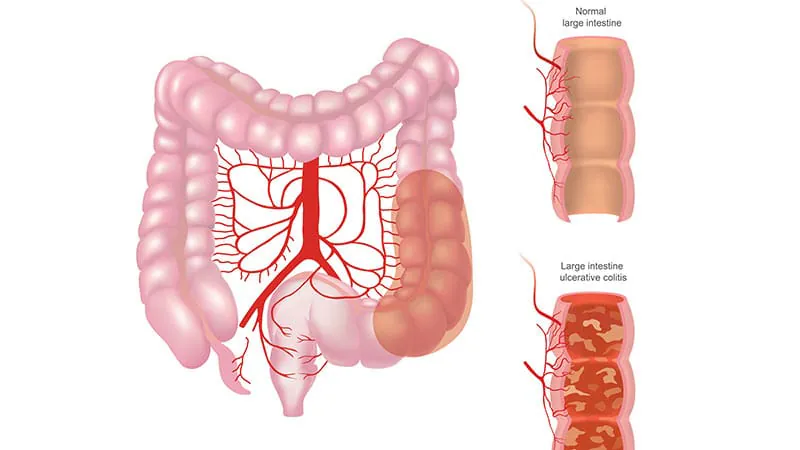
GLP-1 receptor agonists — best known as weight-loss and diabetes drugs — may also help patients with ulcerative colitis achieve remission. A new retrospective study found that UC patients on GLP-1 therapy were nearly six times more likely to reach symptomatic remission at 12 weeks compared to those not on the drugs. Notably, the benefit appeared independent of weight loss, hinting at a direct anti-inflammatory effect.
GLP-1 receptor agonists (RAs) like semaglutide and liraglutide are already well known for managing diabetes and obesity — but a new study suggests they may have an additional benefit: helping patients with ulcerative colitis (UC) get their symptoms under control.
A retrospective cohort study of 300 UC patients (150 on GLP-1 RAs, 150 controls) found that those receiving GLP-1 therapy were nearly six times more likely to achieve symptomatic remission at 12 weeks. Semaglutide outperformed liraglutide, with 77% higher odds of remission. Crucially, weight loss did not predict remission — suggesting the drugs may work through a direct, weight-independent anti-inflammatory mechanism. The therapy was well tolerated, with only mild GI side effects like transient nausea and no treatment discontinuations.
By the Numbers:
Why it matters: If confirmed in larger, prospective trials, GLP-1 RAs could emerge as a valuable adjunctive therapy for UC — especially for patients with overlapping metabolic conditions — potentially expanding the therapeutic toolkit for a disease that remains difficult to manage.