Loading Curie Briefs...
Getting the latest healthcare news for you
Getting the latest healthcare news for you

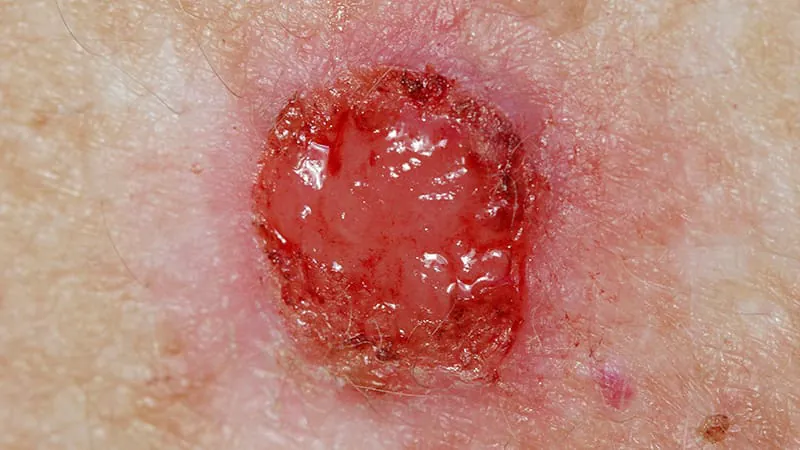
AI-assisted imaging catches invisible skin cancers early. A new feasibility study found that AI-assisted line-field confocal optical coherence tomography (LC-OCT) successfully detected subclinical basal cell carcinomas (BCCs) in 9.3% of high-risk patients — lesions invisible to the naked eye. With a positive predictive value of 94.4%, the technology shows real promise, though experts caution that the clinical significance of these early findings still needs to be established.
AI-powered imaging catches skin cancers before they're visible
A new feasibility study published in JAMA Dermatology found that AI-assisted line-field confocal optical coherence tomography (LC-OCT) can detect subclinical basal cell carcinomas (BCCs) — lesions completely invisible to the naked eye — in high-risk patients. The multicenter German study screened 150 patients with at least two BCC risk factors, scanning inconspicuous facial skin and flagging regions of interest using integrated AI pattern-recognition software.
The results were encouraging for a first-of-its-kind study: 17 subclinical BCCs were identified in 14 patients, with just one false positive. Experts see potential to shift treatment from surgery toward less invasive options like topical creams or light therapy — especially since most detected lesions were superficial. However, they caution that the natural history of these subclinical lesions remains unknown, and no framework yet exists to guide treatment decisions.
By the numbers:
Why it matters: BCC is the world's most common skin cancer, and catching it early — before it causes facial disfigurement or requires surgery — could be a game-changer. While prospective studies are still needed to confirm sensitivity, specificity, and clinical benefit, this technology opens the door to a new era of preclinical skin cancer screening.