Loading Curie Briefs...
Getting the latest healthcare news for you
Getting the latest healthcare news for you

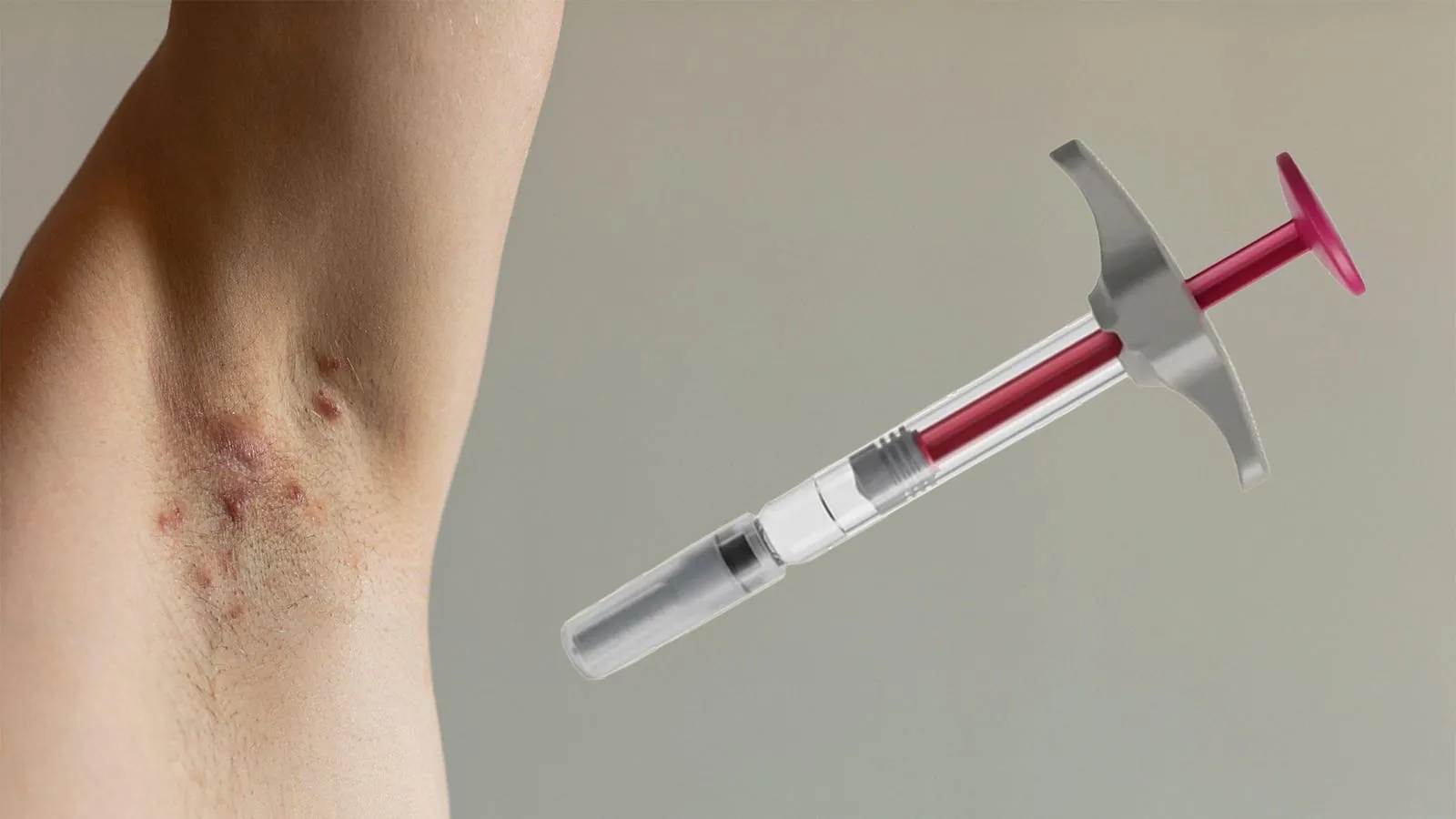
Psoriasis patients on biologics face varying risks of developing hidradenitis suppurativa (HS) as a paradoxical side effect, with the risk differing by more than twofold depending on the drug. Infliximab and adalimumab carry the highest risk, while IL-23 inhibitors risankizumab and guselkumab appear protective. Doctors may want to factor in HS risk when choosing a biologic for their psoriasis patients.
Psoriasis patients treated with biologics can sometimes develop hidradenitis suppurativa (HS) — a painful inflammatory skin condition — as a paradoxical treatment side effect. A new retrospective analysis of over 72,000 patients in the TriNetX clinical database found that this risk varies dramatically depending on which biologic is used, with more than a twofold difference across agents.
TNF inhibitors came out on top for risk: infliximab had the highest relative risk (RR 2.08), followed by adalimumab (RR 1.44). On the flip side, the IL-23 inhibitors risankizumab (RR 0.42) and guselkumab (RR 0.36) were associated with a significantly lower risk of paradoxical HS compared to a propensity-matched control group not on biologics. The exact biological mechanisms remain unclear, but researchers suggest that full monoclonal TNF-α antibodies may activate inflammatory pathways linked to HS, while IL-23 inhibitors may actually be protective.
Key Takeaways
Why it matters: Clinicians managing psoriasis patients on biologics should stay alert for signs of HS — and these findings suggest that switching to an IL-23 inhibitor like risankizumab or guselkumab may be a smart move if paradoxical HS symptoms emerge.