Loading Curie Briefs...
Getting the latest healthcare news for you
Getting the latest healthcare news for you

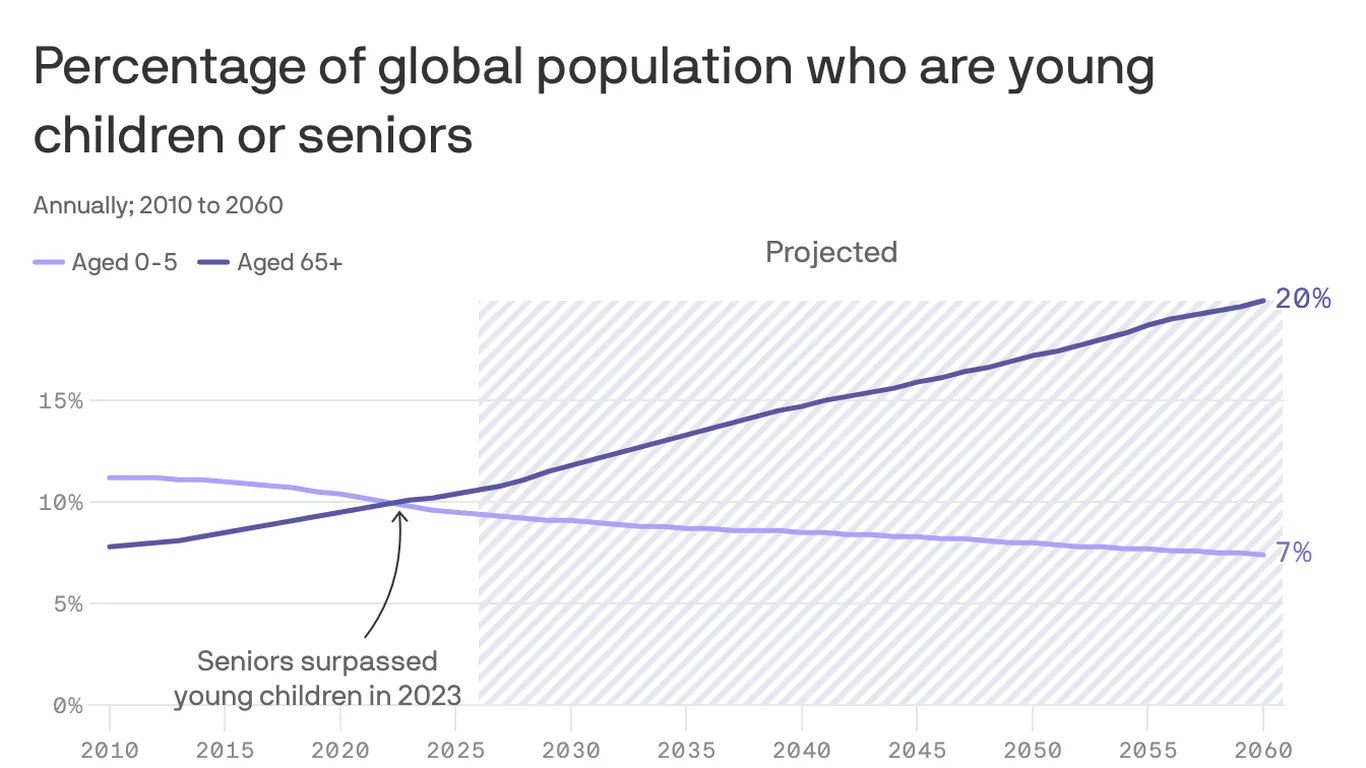
The world just hit a demographic milestone: people 65 and older now outnumber children under 5 for the first time in recorded history. Falling birth rates and longer lifespans are driving a global aging shift that's set to strain health systems, pensions, and long-term care for decades. The trend has spread well beyond wealthy nations, with China, India, and dozens of other countries now below replacement-level fertility.
The world just crossed a historic threshold. For the first time ever, people aged 65 and older outnumber children under 5 globally, according to a new U.S. Census Bureau report. The culprits? A sharp drop in fertility rates and rising longevity — a combination that's flipping the traditional age pyramid and putting enormous pressure on health systems, pension programs, and caregiving infrastructure worldwide.
The low-birth trend is no longer confined to wealthy nations. China, India, Bangladesh, Mexico, and Vietnam are among the major countries now at or below the 2.1-births-per-woman replacement level. This creates what researchers call a "fertility trap" — smaller younger generations following larger older ones, accelerating aging and, in some cases, eventual population decline.
Experts argue the shift doesn't have to be a crisis. Longer lives reflect a century of public health progress, and older adults can remain economically active. But societies will need to rethink how they support aging populations through preventive health, flexible work, and age-friendly policies.
By the Numbers:
Why it matters: This demographic inversion will reshape global healthcare demand, workforce dynamics, and social safety nets for generations. Health systems must begin preparing now for a world where older adults represent a rapidly growing share of the population.