Loading Curie Briefs...
Getting the latest healthcare news for you
Getting the latest healthcare news for you

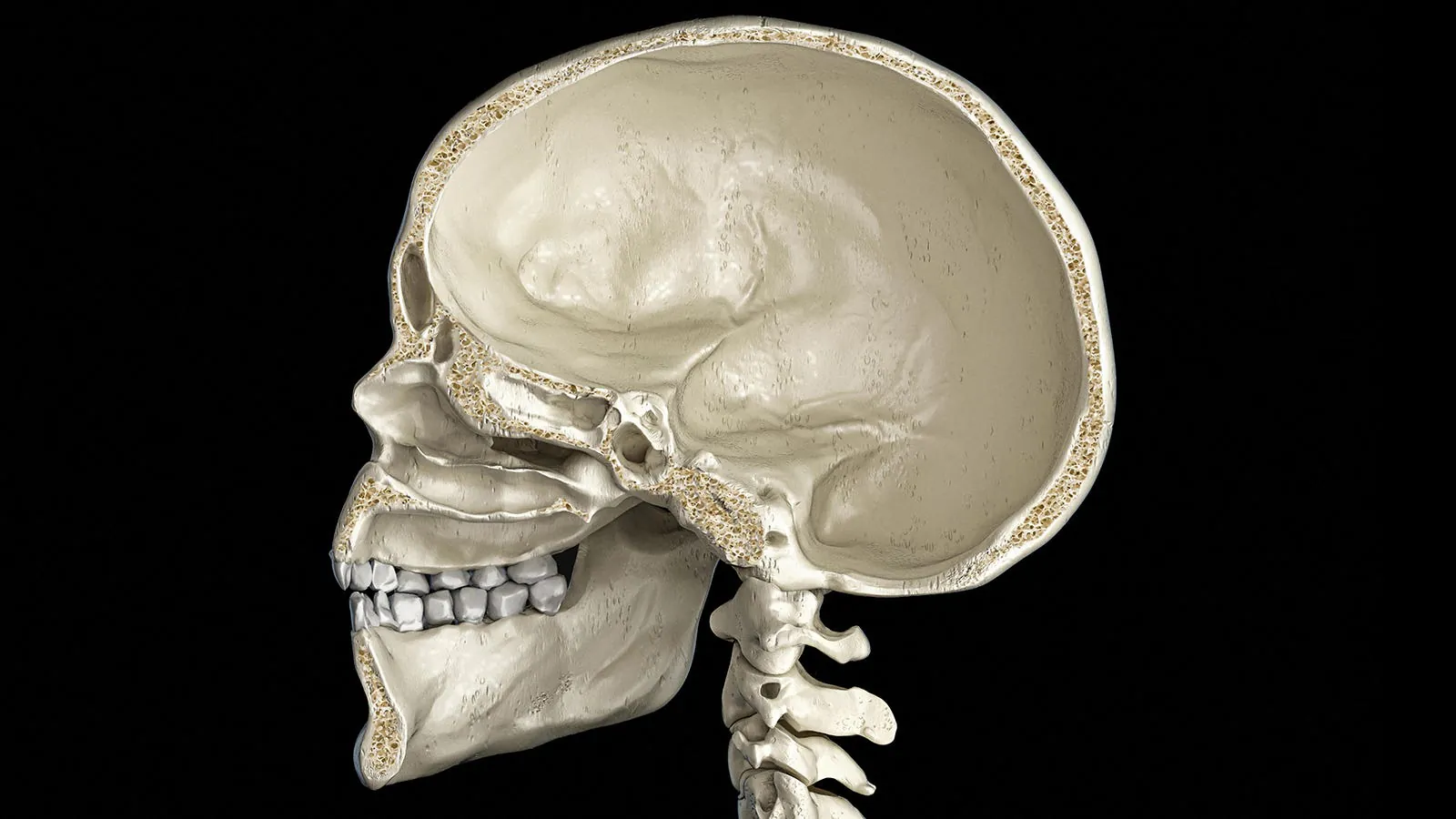
Your skull might be fueling your chronic pain. A new study found that a protein called TSPO — produced in skull bone marrow and linked to brain inflammation — is significantly elevated in people with chronic back pain and knee osteoarthritis, and correlates directly with how much pain they feel. Researchers say this previously overlooked structure could be a promising new target for pain therapies.
Your skull might be doing more than just protecting your brain. A new study published in Science Translational Medicine found that the skull bone marrow (SBM) — increasingly recognized as an immunologically active tissue — may play a key role in chronic pain. Researchers used advanced PET/MRI imaging to measure levels of 18-kDa translocator protein (TSPO), a marker of neuroinflammation, in 125 patients with chronic knee or back pain and 22 healthy controls.
The results were striking: TSPO levels were significantly higher in chronic pain patients than in controls, and they correlated meaningfully with pain intensity, pain interference with daily life, and related symptoms like anxiety, depression, and sleep disturbance. Postmortem skull bone marrow analysis further confirmed the findings.
By the Numbers:
Why it matters: Chronic pain is notoriously hard to treat, often persisting without clear tissue damage. Identifying the skull bone marrow as a potential driver of neuroinflammation opens a new frontier for targeted therapies — including pharmacological agents and non-invasive stimulation techniques like photostimulation and low-power ultrasound.