Loading Curie Briefs...
Getting the latest healthcare news for you
Getting the latest healthcare news for you

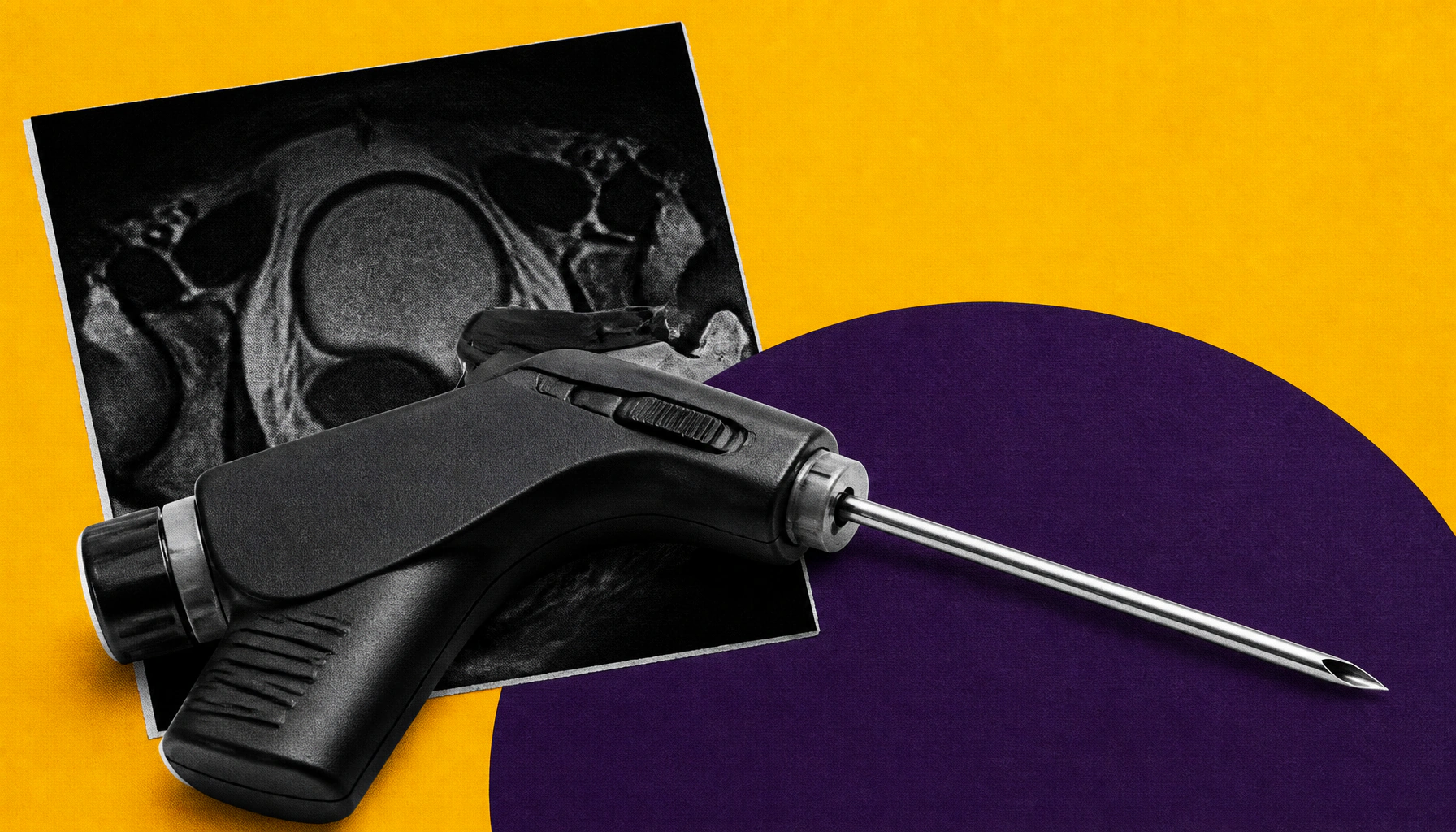
Don't ditch the systematic biopsy just yet. A new multicenter study found that relying solely on MRI-targeted biopsy for equivocal PI-RADS 3 prostate lesions misses clinically significant prostate cancer in about 1 in 4 cases detected by the combined approach. Researchers say targeted biopsy alone shouldn't replace the combined strategy — though select low-risk patients may eventually qualify for a scaled-back approach.
Don't ditch the systematic biopsy just yet. A large retrospective multicenter study published in European Urology Oncology found that using only MRI-targeted biopsy for PI-RADS 3 prostate lesions — those considered "equivocal" on imaging — misses a clinically meaningful number of significant cancers. Among 902 men who underwent both targeted and systematic biopsy, targeted biopsy alone failed to detect 59 cases of clinically significant prostate cancer (csPCa), exceeding the study's exploratory 5% safety benchmark.
The findings push back against the idea of streamlining biopsy protocols for this gray-zone patient group. Researchers noted that while certain low-risk subgroups — particularly men with low PSA density undergoing transperineal biopsy — showed much lower miss rates, the evidence isn't yet strong enough to routinely skip systematic biopsy.
By the Numbers:
Why it matters: For urologists managing men with ambiguous MRI findings, this study reinforces that dropping systematic biopsy could leave a significant subset of patients with undetected cancer. Risk-adapted approaches may be on the horizon, but for now, the combined strategy remains the standard of care.