Loading Curie Briefs...
Getting the latest healthcare news for you
Getting the latest healthcare news for you

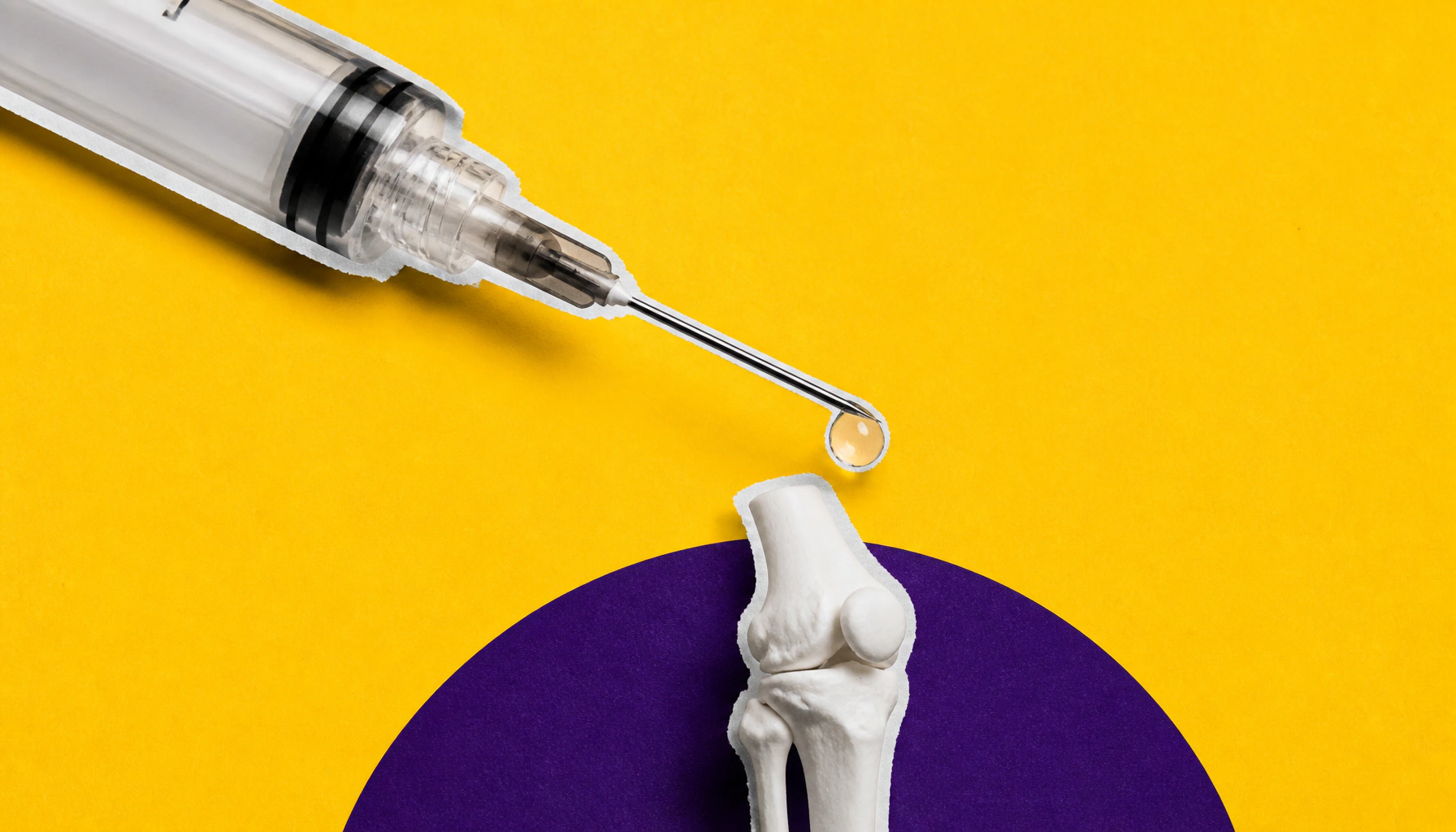
Scientists at the University at Buffalo have developed an injectable hydrogel that transforms from liquid to a lubricating semisolid inside the joint, slowly releasing medication over several weeks. The platform could reduce the frequency of painful joint injections while targeting the underlying disease — not just the symptoms. It's a promising development for the millions living with osteoarthritis.
Researchers at the University at Buffalo have engineered an injectable hydrogel that could transform how osteoarthritis (OA) is treated. Delivered as a liquid via a minimally invasive injection, the formulation converts into a smooth, lubricating semisolid depot at body temperature — acting as a long-lasting drug reservoir inside the joint for several weeks.
The platform pairs a biocompatible polymer matrix with drug-loaded nanocarriers capable of carrying high concentrations of poorly soluble (hydrophobic) compounds — a class of drugs that's historically difficult to deliver effectively. Medication is released gradually through diffusion, providing sustained local exposure while minimizing systemic side effects. Researchers validated the approach using a SIRT6 activator, and the system can be adapted for other disease-modifying compounds.
Key Takeaways:
Why it matters: Current intra-articular treatments wear off quickly and rarely slow disease progression. This platform could meaningfully reduce injection frequency, improve patient adherence, and open the door to delivering disease-modifying therapies directly where they're needed most.