Loading Curie Briefs...
Getting the latest healthcare news for you
Getting the latest healthcare news for you

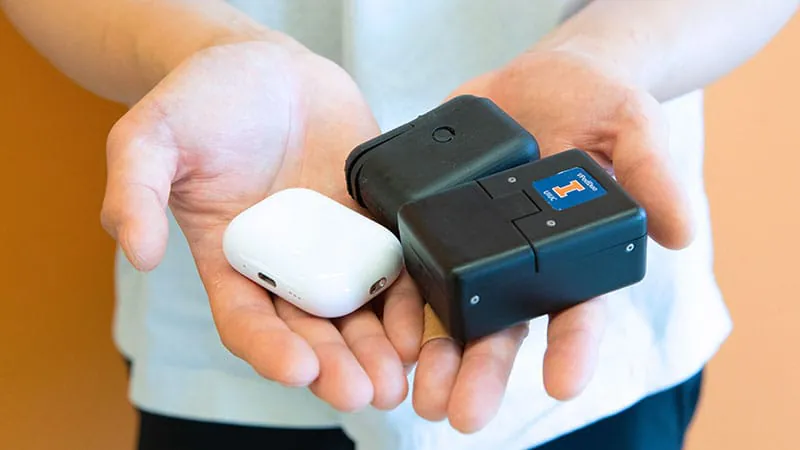
A fluorometer the size of an AirPod case can detect cancer biomarkers, HIV, and other pathogens with lab-grade accuracy — no lab required. Developed by University of Illinois researchers, the VPodDuo uses photodiodes to read fluorescent signals from multiple assays simultaneously. The team hopes it could one day enable at-home cancer screening, catching diseases earlier and saving lives.
A lab in your pocket — almost. Researchers at the University of Illinois Urbana-Champaign have developed the VPodDuo, a handheld fluorometer roughly the size of an AirPod case that can detect cancer biomarkers, HIV, Zika virus, and Staphylococcus aureus with accuracy comparable to expensive lab-grade equipment. Published in the IEEE Sensors Journal in July 2026, the device uses dual photodiodes to simultaneously read a test and control sample, converting fluorescent light signals into diagnostic results — no bulky optics or lab infrastructure needed.
The team validated the device against three professional-grade fluorimeters, successfully matching performance across five different assays, including lung cancer-associated circulating tumor DNA and microRNA biomarkers. The researchers were themselves surprised by how consistently the compact, low-cost device held up across such varied tests.
Key Takeaways:
Why it matters: Early detection dramatically improves cancer outcomes, but access to frequent, affordable testing remains a barrier for many patients. A validated, portable diagnostic device could democratize screening — bringing lab-quality results to homes, clinics in underserved areas, and point-of-care settings worldwide.