Loading Curie Briefs...
Getting the latest healthcare news for you
Getting the latest healthcare news for you

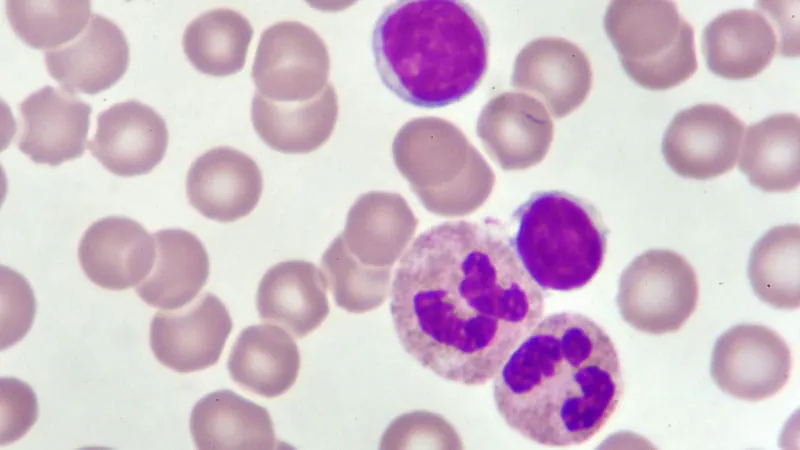
Watch and wait still wins for early-stage CLL. A new analysis of the CLL12 trial found that ibrutinib improved event-free survival in certain high-risk genetic subgroups of early-stage chronic lymphocytic leukemia — but failed to extend overall survival in any group. Researchers say the findings reinforce "watch and wait" as the standard of care, even for patients with high-risk markers like unmutated IGHV or del(17p)/TP53 mutations.
Watch and wait still wins for early-stage CLL
A new genetic subgroup analysis of the CLL12 trial — a double-blind, placebo-controlled study of 515 patients with Binet stage A chronic lymphocytic leukemia (CLL) — found that ibrutinib improved event-free survival (EFS) in patients with specific high-risk genetic markers, including unmutated IGHV, del(11q), trisomy 12, and mutations in NOTCH1, ATM, and NFKBIE. However, ibrutinib provided no overall survival (OS) benefit in any genetic subgroup, including those with the highest-risk features.
The study, led by researchers at Ulm University and published in Blood, used comprehensive genetic profiling — including FISH, IGHV sequencing, and a 12-gene panel — to assess whether early treatment could benefit specific patient subsets. Despite meaningful EFS improvements in several subgroups, the absence of an OS benefit held firm across the board.
Key Takeaways
Why it matters: These findings provide strong evidence that "watch and wait" should remain the standard of care for asymptomatic early-stage CLL — regardless of genetic risk profile. Clinicians should resist the urge to treat early based on high-risk genetics alone, as earlier intervention with ibrutinib does not translate into a survival advantage.


