Loading Curie Briefs...
Getting the latest healthcare news for you
Getting the latest healthcare news for you

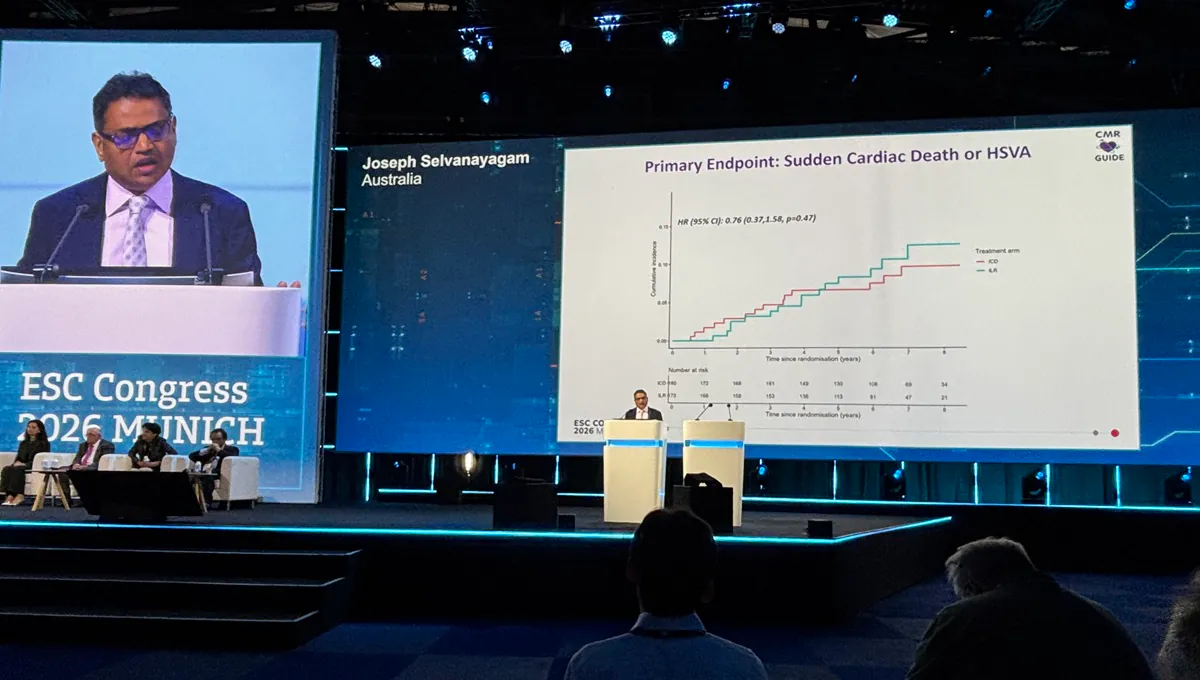
Cardiac scarring alone isn't enough to justify ICDs in cardiomyopathy patients with preserved-ish heart function. The CMR GUIDE trial found no significant overall reduction in sudden cardiac death or dangerous arrhythmias with ICDs versus loop recorders — but younger patients (under 70) showed a meaningful benefit, keeping the debate alive.
The CMR GUIDE trial set out to answer a long-standing clinical question: should patients with cardiomyopathy, an LVEF between 36–50%, and myocardial scar on cardiac MRI receive a preventive implantable cardioverter-defibrillator (ICD)? Current guidelines only recommend ICDs for primary prevention when LVEF is 35% or below — leaving a significant gap for patients with mild-to-moderate dysfunction. The trial, presented at ESC Congress 2026 and published in JAMA, enrolled 353 patients across 18 sites and followed them for a median of 6.3 years.
The short answer: the trial didn't meet its primary endpoint. ICDs did not significantly reduce the composite of sudden cardiac death (SCD) and hemodynamically significant ventricular arrhythmias compared to implantable loop recorders. However, SCD alone was reduced by 72% with ICDs, and patients under 70 years old showed a clear benefit — while those 70 and older did not.
Key Takeaways
Why it matters: Millions of cardiomyopathy patients fall into this LVEF "gray zone." While CMR GUIDE didn't deliver a definitive answer, it raises important questions about age-tailored ICD use and the role of cardiac MRI in risk stratification beyond ejection fraction alone.