Loading Curie Briefs...
Getting the latest healthcare news for you
Getting the latest healthcare news for you

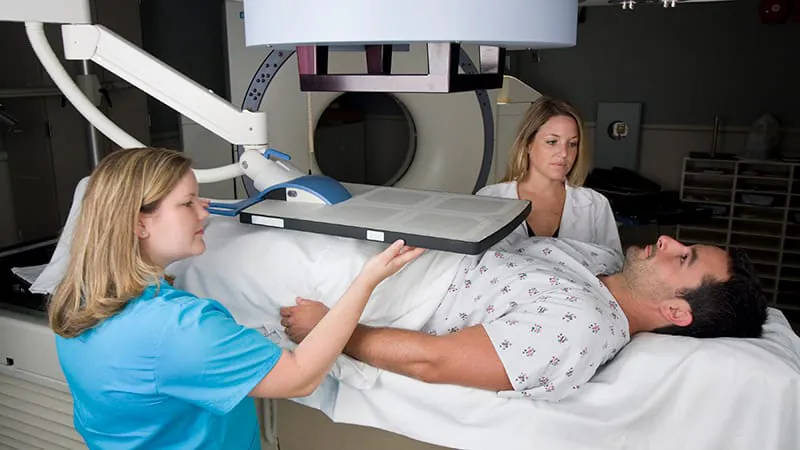
A phase 3 trial finds no survival edge for accelerated radiation in prostate cancer recurrence. The SHARE trial showed that hypofractionated salvage radiotherapy matched conventional RT in biochemical progression-free survival over 4 years — but came with a notably higher rate of late GI side effects. Researchers say it may still be a viable alternative, with some caveats.
A faster radiation schedule didn't outperform the standard approach for prostate cancer patients experiencing biochemical recurrence after surgery, according to results from the phase 3 SHARE trial published in the Journal of Clinical Oncology. The randomized study enrolled 316 patients in South Korea and compared hypofractionated RT (65 Gy in 26 fractions) against conventional RT (66 Gy in 33 fractions), finding no meaningful difference in disease control over a median follow-up of 53 months.
The tradeoff? More GI toxicity. While oncologic outcomes were essentially identical, patients in the hypofractionated arm had a significantly higher rate of late grade 2+ gastrointestinal toxicity — though all cases resolved by last follow-up. Notably, the higher toxicity occurred mostly in patients treated without an endorectal balloon, hinting at a potential protective role for that device.
By the Numbers:
Why it matters: While hypofractionation offers logistical advantages (fewer clinic visits), this trial suggests it doesn't improve cancer control and may increase GI side effects. Clinicians should weigh patient convenience against toxicity risk, and future research should clarify whether endorectal balloons can mitigate GI harm in this setting.