Loading Curie Briefs...
Getting the latest healthcare news for you
Getting the latest healthcare news for you

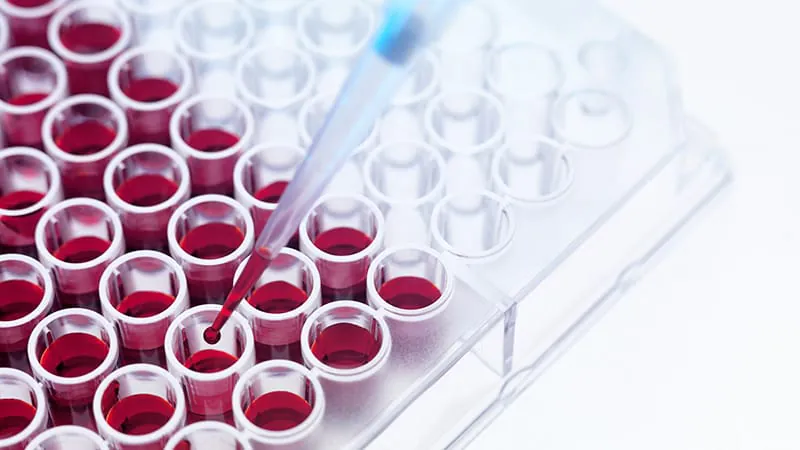
A faster, cheaper way to test HIV drug resistance is on the horizon. Researchers at the University of Washington unveiled an enzyme activity assay that can detect resistance to reverse transcriptase (RT) inhibitors in about 2 hours at roughly $4 per test — a fraction of the time and cost of current methods. The catch? It doesn't cover integrase inhibitors, which are increasingly a bigger concern in HIV treatment.
A faster, cheaper way to test HIV drug resistance is on the horizon. Researchers at the University of Washington presented findings at AIDS 2026 in Rio de Janeiro showcasing a product-enhanced reverse transcriptase (PERT) assay that can detect phenotypic resistance to all classes of RT inhibitors — in roughly 2 hours and at a reagent cost of about $4 per test.
Current drug resistance testing is a bottleneck: genotypic tests take days to weeks and can't directly link mutations to drug susceptibility, while phenotypic tests require weeks of labor-intensive cell culture. The PERT assay sidesteps both issues by measuring RT enzyme activity directly — no cell culture, no expensive sequencing technology required.
By the Numbers:
Why it matters: Expanded access to affordable, rapid drug resistance testing could be a game-changer for point-of-care settings, especially in low-resource environments. However, experts caution that the assay's inability to assess integrase inhibitor resistance — particularly for dolutegravir, a first-line drug facing rising global resistance — limits its immediate clinical utility.