Loading Curie Briefs...
Getting the latest healthcare news for you
Getting the latest healthcare news for you

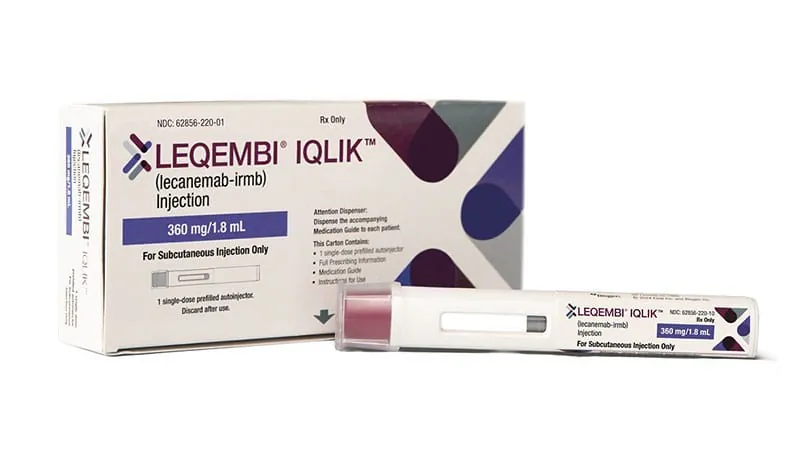
Alzheimer's treatment just got a lot more convenient. The FDA approved a fully at-home subcutaneous starting dose of lecanemab (Leqembi Iqlik), letting patients skip the infusion center from day one. But experts caution that home dosing doesn't mean hands-off — MRI monitoring, caregiver training, and clinician oversight remain essential throughout treatment.
The FDA has approved a subcutaneous (SC) at-home starting dose of lecanemab (Leqembi Iqlik) for patients with mild cognitive impairment or mild Alzheimer's disease — a significant shift from the previous requirement of 18 months of IV infusions before any home dosing was permitted. Patients can now self-inject 500 mg weekly (two 250 mg injections) to initiate treatment, then transition to a 360 mg weekly maintenance dose, all from home.
The SC formulation was shown to be bioequivalent to IV dosing, with an exposure ratio of 104%, and amyloid reduction appears to be driven by drug exposure rather than route of administration. Real-world data from the LEADER study found that over 75% of patients remained stable and nearly 7% improved over an average of 17 months. Patient satisfaction was high — 97% reported favorable experiences with SC dosing, and 94% said they'd "definitely" recommend it.
Key Takeaways:
Why it matters: Home dosing could reduce the logistical burden of frequent infusion-center visits, particularly for patients in rural or underserved areas. However, experts note that access barriers — including diagnosis, amyloid confirmation, MRI availability, and insurance coverage — remain largely intact, meaning home dosing may narrow, but not close, the existing care gap.