Loading Curie Briefs...
Getting the latest healthcare news for you
Getting the latest healthcare news for you

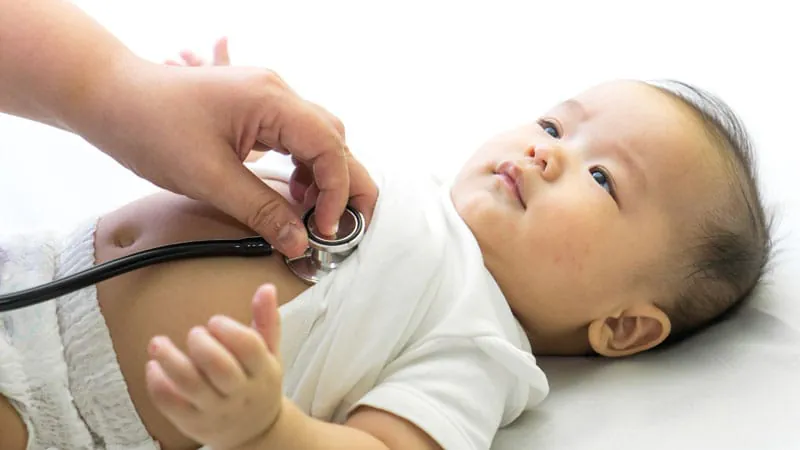
The AAP updated its newborn jaundice guidelines in 2022, raising the bilirubin thresholds for starting phototherapy — but a new survey suggests not all pediatricians are on board. While over 70% of respondents correctly identified major risk factors for severe jaundice, fewer than half recognized Down syndrome as one. Some clinicians are still treating earlier than necessary, putting newborns under phototherapy lights when they may not need it.
The American Academy of Pediatrics (AAP) overhauled its newborn jaundice (hyperbilirubinemia) guidelines in 2022 for the first time since 2004, raising the bilirubin thresholds at which phototherapy should begin. The goal: reduce unnecessary treatment and its burden on newborns and families. But a new survey of New Jersey pediatricians, presented at Pediatric Hospital Medicine 2026, reveals that the updated guidance isn't being uniformly applied.
Of roughly 120 pediatricians surveyed, most showed solid knowledge of key guideline elements — but notable blind spots emerged. Fewer than half recognized Down syndrome as a risk factor for severe jaundice, and 12.5% said they'd start phototherapy earlier than the guidelines recommend. Between 18%–33% skipped questions on bilirubin testing and phototherapy management entirely, signaling potential gaps in real-world practice.
Key Takeaways:
Why it matters: Unnecessary phototherapy isn't just inconvenient — it separates newborns from their families and adds healthcare burden. Closing these knowledge gaps could mean fewer babies under the lights without a clinical need.