Loading Curie Briefs...
Getting the latest healthcare news for you
Getting the latest healthcare news for you

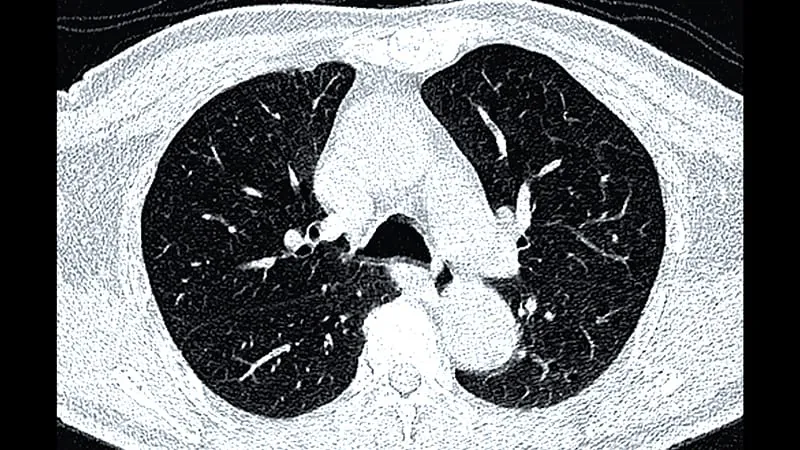
An AI-based imaging tool outshone genomic sequencing for identifying cancerous lung nodules, catching all 23 cancers in a study vs. just 6 detected by the genetic classifier. Presented at a major bronchology conference, the findings suggest AI radiomics could become a powerful decision-support tool for clinicians navigating the tricky middle ground of intermediate-risk nodules — though experts urge caution and call for larger prospective studies.
Every year, about 1.6 million incidental pulmonary nodules are detected in the US, and figuring out which ones are actually cancerous is a persistent clinical challenge. Traditional risk calculators often leave nodules in an ambiguous "intermediate-risk" zone, leading to either unnecessary invasive biopsies or delayed cancer diagnoses. A new study presented at the Annual Conference of the American Association for Bronchology and Interventional Pulmonology suggests AI-based radiomics could help cut through that uncertainty.
Researchers compared an AI tool using a Lung Cancer Prediction (LCP) Score against a Genomic Sequence Classifier (GSC) in 59 patients with pathology-confirmed lung nodules. The AI tool came out well ahead overall — but the two tools have meaningfully different strengths, and experts caution they shouldn't be treated as interchangeable.
By the Numbers:
Why it matters: The AI tool's high sensitivity makes it a strong rule-out test — meaning a low score could confidently spare patients from unnecessary procedures. However, its lower specificity means it also flags more false positives. Experts agree that larger prospective validation studies are essential before these tools are widely adopted in clinical workflows.