Loading Curie Briefs...
Getting the latest healthcare news for you
Getting the latest healthcare news for you

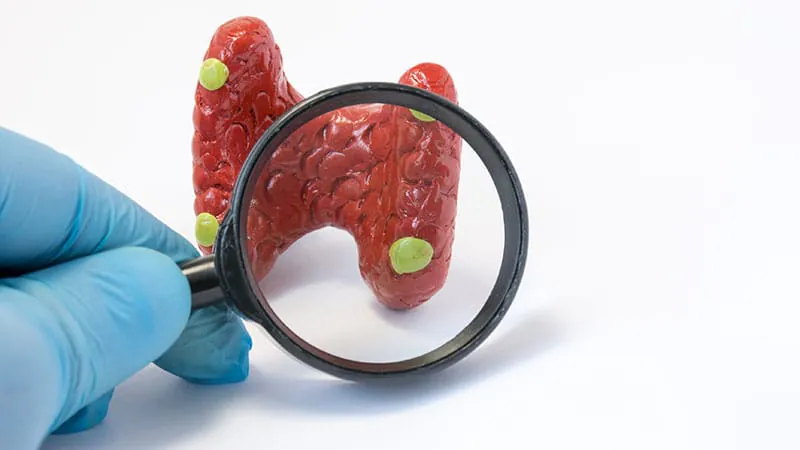
Two-thirds of patients with primary hyperparathyroidism experience serious organ damage, yet fewer than 25% receive the recommended surgical treatment. A large national study found that 72% of patients met guideline criteria for parathyroidectomy, but only 22% actually underwent the procedure. The findings highlight a significant gap between clinical guidelines and real-world care.
A major national study published in JAMA Surgery reveals a striking disconnect between guidelines and practice in the management of primary hyperparathyroidism (PHPT) — a common endocrine disorder that can lead to osteoporosis, kidney stones, and chronic kidney disease. Analyzing data from over 43,000 US patients diagnosed between 2010 and 2023, researchers found that end-organ damage was far more prevalent than previously recognized, and that surgery — the definitive treatment — remains dramatically underutilized.
At diagnosis, more than half of patients already had end-organ damage, and nearly a third of those who didn't went on to develop it within a median of 516 days. Despite 72.8% of the cohort meeting established criteria for surgery, only 22.2% underwent parathyroidectomy.
By the Numbers:
Why it matters: With two-thirds of PHPT patients experiencing significant morbidity and the vast majority qualifying for a curative procedure, this study underscores an urgent need to close the gap between guideline recommendations and actual clinical practice.