Loading Curie Briefs...
Getting the latest healthcare news for you
Getting the latest healthcare news for you

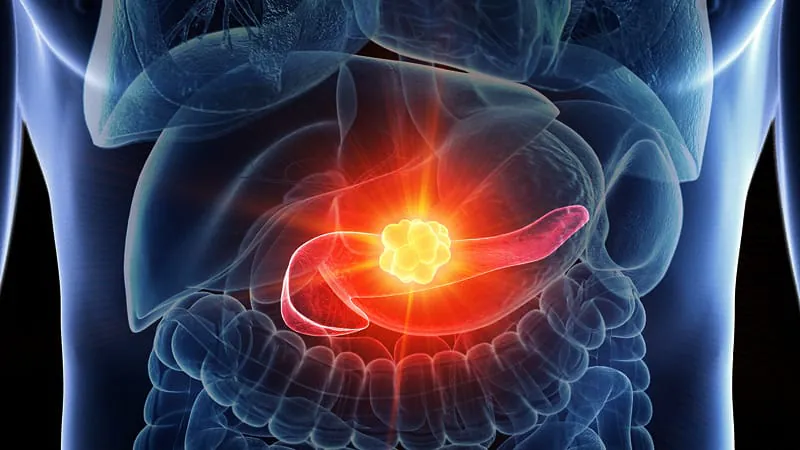
Two studies confirm that adding radiotherapy to chemotherapy for pancreatic cancer improves pathological markers but not overall survival. However, node-negative patients may still see meaningful gains from chemoradiation. For most patients, the data suggest distant disease spread — not local recurrence — remains the primary challenge.
Two studies examining the role of radiotherapy in pancreatic cancer treatment are pointing in the same direction: better tumor response on paper doesn't always mean better outcomes for patients. In the most recent retrospective study of 800 patients with pancreatic ductal adenocarcinoma (PDAC), adding radiotherapy to neoadjuvant chemotherapy (NAC) improved pathological complete response rates and R0 resection rates — but median overall survival was identical at 42 months in both groups, and recurrence patterns were similar too.
An earlier phase 3 trial reached a comparable conclusion in the adjuvant setting: adding chemoradiotherapy (CXRT) to gemcitabine after surgery didn't improve overall survival in the full cohort. The bright spot? Node-negative patients showed significant improvements in both overall survival and disease-free survival with CXRT — a finding that could shape future treatment decisions for that subgroup.
Key Takeaways:
Why it matters: Pancreatic cancer remains one of the deadliest malignancies, and these findings suggest that controlling local disease isn't enough — micrometastatic spread is the bigger challenge. Radiotherapy may still have a role for select patients, but the field needs smarter strategies to tackle systemic disease.