Loading Curie Briefs...
Getting the latest healthcare news for you
Getting the latest healthcare news for you

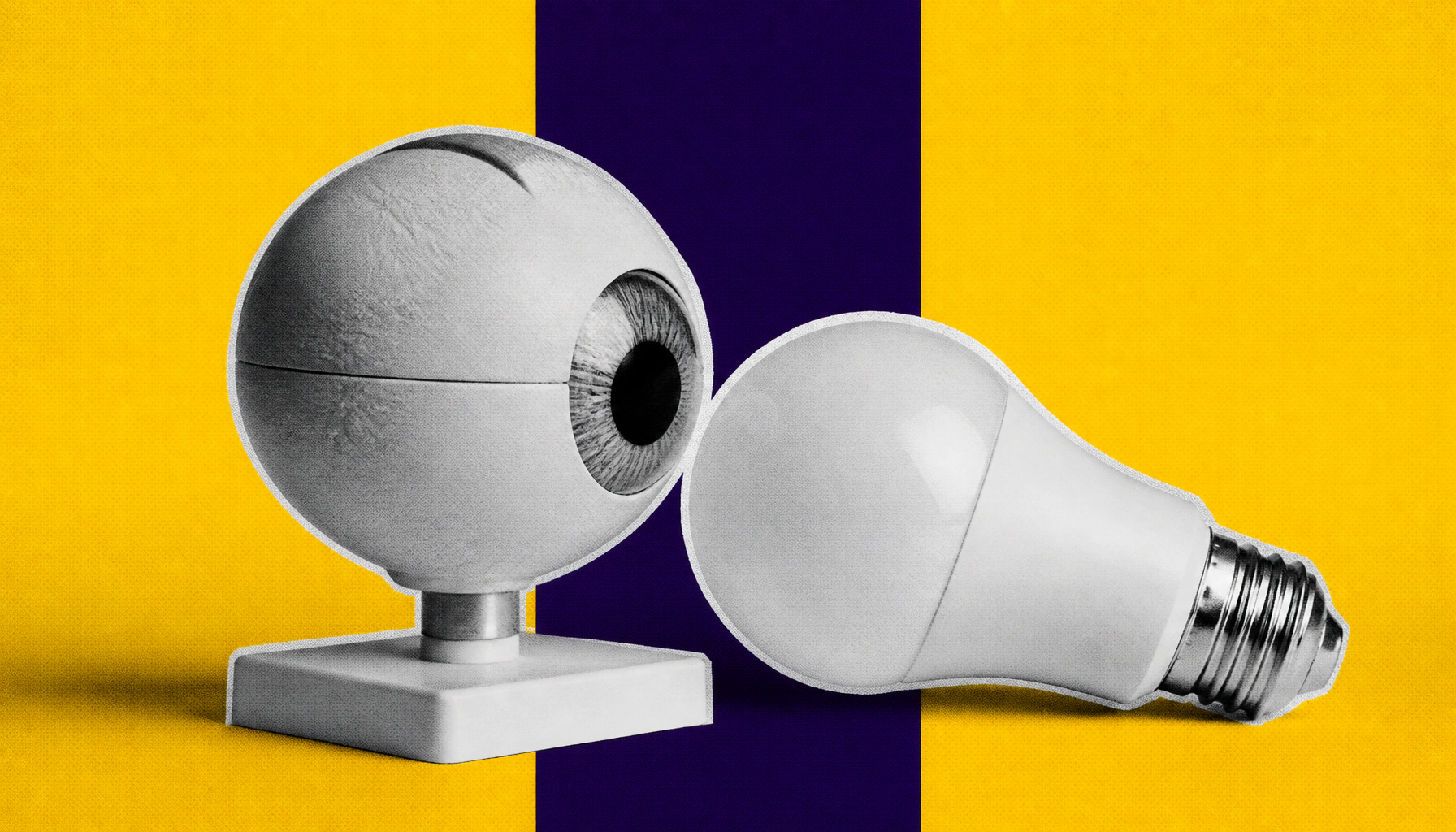
Indoor lighting may be missing a key ingredient for healthy eye development. Researchers found that indigo light — abundant in sunlight but scarce in standard LEDs — completely prevented myopia in tree shrews. The findings, published in Cell Reports Medicine, open the door to redesigning indoor lighting to protect children's vision.
Childhood myopia is on the rise globally, and a new study suggests that the lighting inside our homes and schools may be partly to blame. Researchers from Cincinnati Children's and the University of Alabama at Birmingham found that indigo light — a short-wavelength visible light (419–446 nm) plentiful in natural sunlight but largely absent from standard white LEDs — completely prevented the development of nearsightedness in tree shrews, a near-primate animal model with eyes closely resembling human eyes. The findings were published in Cell Reports Medicine on August 18, 2026.
The team discovered that indigo light works by activating OPN5, a nonvisual light-sensing receptor in the eye, and that it can pass through the human lens (unlike ultraviolet wavelengths below 400 nm). Standard indoor LEDs, while adequate for vision, lack this biologically important slice of the spectrum — potentially depriving developing eyes of a signal needed for normal growth.
Key Takeaways:
Why it matters: With nearly 5 billion people projected to be myopic by 2050, a passive, scalable lighting intervention could be a game-changer for public eye health — especially for children spending more time indoors.