Loading Curie Briefs...
Getting the latest healthcare news for you
Getting the latest healthcare news for you

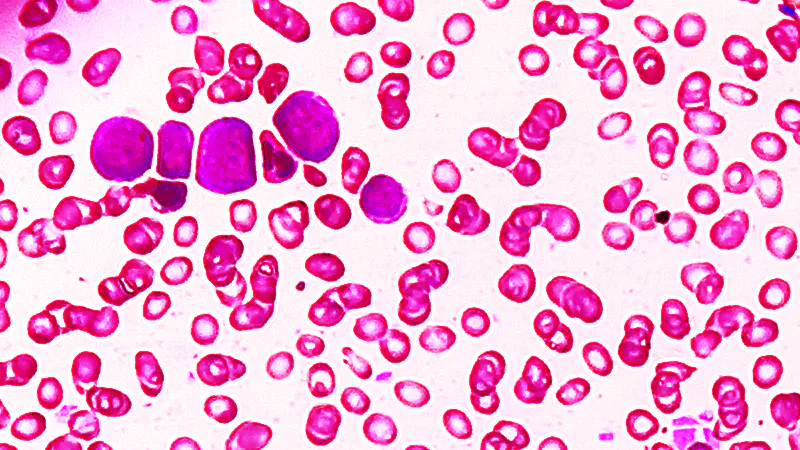
A smarter way to track leukemia relapse risk around transplant time. A retrospective study of 219 FLT3-ITD AML patients found that high-sensitivity PCR-NGS sequencing detected measurable residual disease (MRD) far more accurately than standard methods, identifying those at highest relapse risk. Crucially, post-transplant FLT3 inhibitor therapy only benefited patients with detectable MRD — not those who were MRD-negative.
A new study published in Blood Advances shows that high-sensitivity molecular monitoring around the time of stem cell transplant can sharply stratify relapse risk in patients with FLT3-ITD acute myeloid leukemia (AML). Researchers used PCR-next-generation sequencing (PCR-NGS) to detect measurable residual disease (MRD) in 219 adults in morphologic remission before and after allogeneic transplant — and the results were striking.
PCR-NGS caught pretransplant MRD in 32% of patients, compared to just 7.8% with the standard capillary electrophoresis method. Patients who remained MRD-negative throughout had the best outcomes, while those who converted to or stayed MRD-positive fared significantly worse. Importantly, post-transplant FLT3 inhibitor maintenance improved outcomes — but only in MRD-positive patients, suggesting MRD status could guide who actually needs maintenance therapy.
By the Numbers
Why it matters: This study makes the case for integrating high-sensitivity sequencing into routine transplant care for FLT3-ITD AML, potentially enabling more personalized decisions about conditioning intensity and post-transplant therapy.