Loading Curie Briefs...
Getting the latest healthcare news for you
Getting the latest healthcare news for you

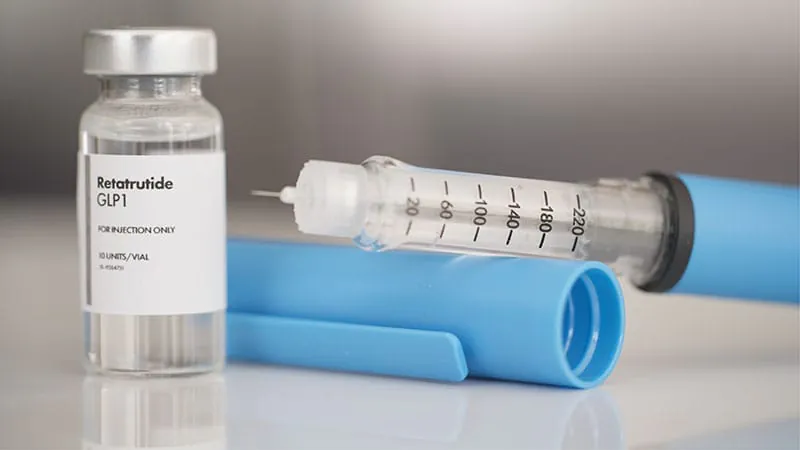
People buying unapproved retatrutide on the black market are getting a bad deal — literally. A new preprint study found gray-market users lost only about half the weight seen in clinical trials, while still experiencing elevated heart rate and cardiovascular symptoms. Meanwhile, demand keeps surging, driven by social media hype, even as Eli Lilly and the FDA push back against illegal sales.
Retatrutide — Eli Lilly's highly anticipated triple-agonist weight-loss drug, still in Phase 3 trials and not yet FDA-approved — has spawned a booming gray market fueled by social media, online vendors, and compounding pharmacies. A new preprint study using AI-analyzed electronic health records found that patients obtaining retatrutide outside of clinical trials lost just 7.2% of body weight at 6–12 months, compared to 15.5% in trial participants — less than half the benefit, and comparable to tirzepatide (7.7%).
Importantly, gray-market users still experienced the drug's characteristic cardiovascular side effects. Both trial and compounded retatrutide users saw significant heart rate increases at 3 months, and the pooled retatrutide group showed meaningfully higher rates of cardiovascular and neuropsychiatric symptoms compared to semaglutide and tirzepatide users. Some gray-market products were also co-formulated with other unapproved peptides like BPC-157 and IGF-1 analogues — none of which have been evaluated in clinical trials.
Key Takeaways:
Why it matters: With gray-market retatrutide use growing 1.8x per quarter, clinicians are increasingly likely to encounter patients using it — often without disclosing it. This study offers the first real-world signal that unapproved versions carry real risks without the promised rewards.