Loading Curie Briefs...
Getting the latest healthcare news for you
Getting the latest healthcare news for you

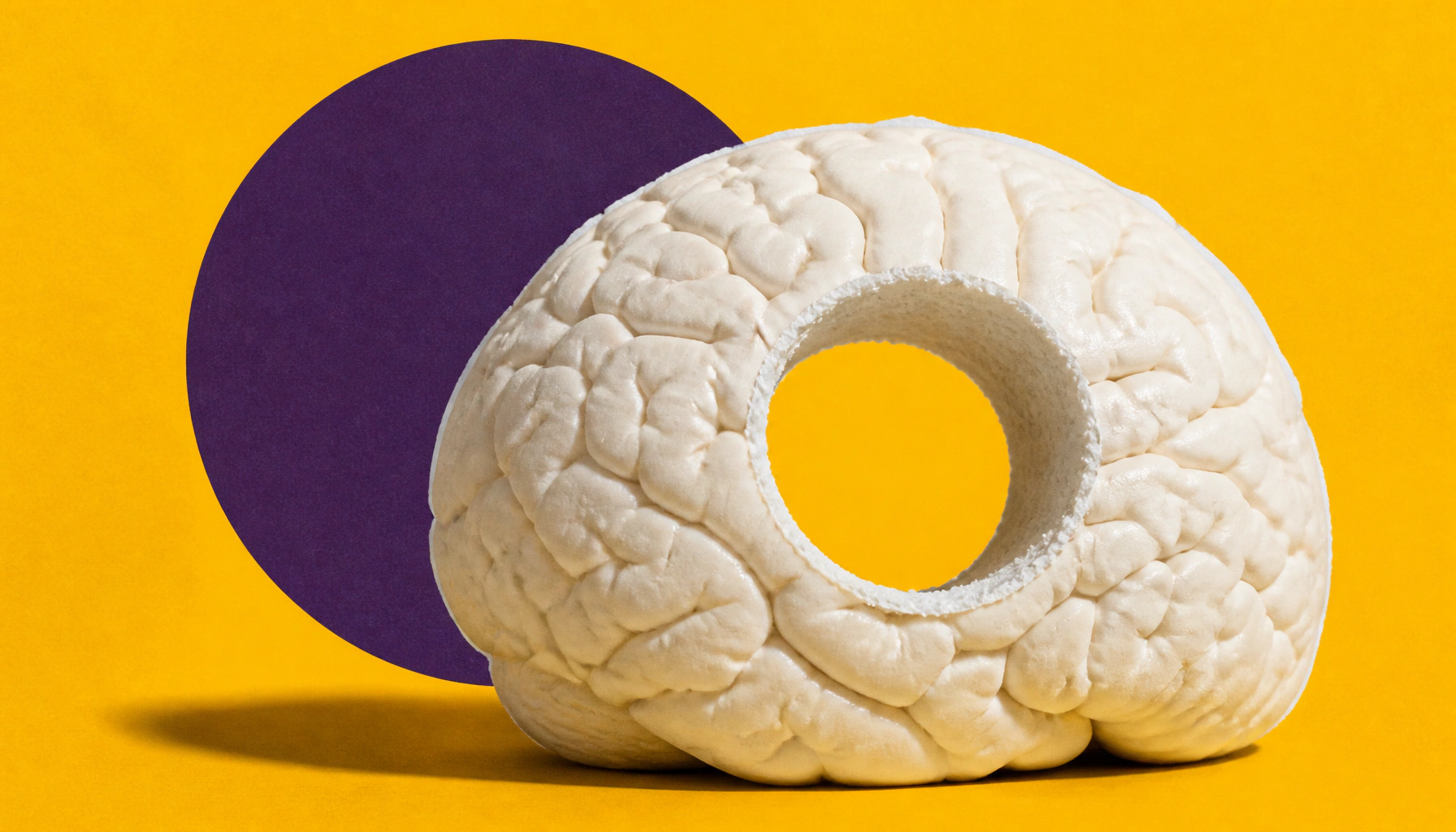
The idea that your brain has a central decision-making hub may be wrong. Indiana University neuroscientist Tom James argues that what we call "decisions" aren't produced by a dedicated brain system — they emerge from the continuous, simultaneous interplay of sensory, motor, and environmental processes. His work, published in the Journal of Cognitive Neuroscience, challenges decades of cognitive science assumptions.
The classic story of decision-making goes like this: you perceive something, think about it, decide, then act. Neat, linear, intuitive. But Indiana University neuroscientist Tom James says that tidy sequence doesn't match what's actually going on in the brain — and his new paper in the Journal of Cognitive Neuroscience makes a compelling case for rethinking the whole framework.
James argues there's no identifiable neural process that functions as a dedicated "decision-maker." Instead, what we call a decision is better understood as an abstract, high-level description of behavior — useful for everyday language, but not a physical mechanism that causes action. He draws an analogy to a "center of mass": a helpful concept, but not something that can independently move an object.
Key Takeaways:
Why it matters: This shift in thinking could reshape how neuroscientists study cognition, mental health, and behavior — moving away from linear models toward approaches that capture the brain, body, and environment working together in real time.