Loading Curie Briefs...
Getting the latest healthcare news for you
Getting the latest healthcare news for you

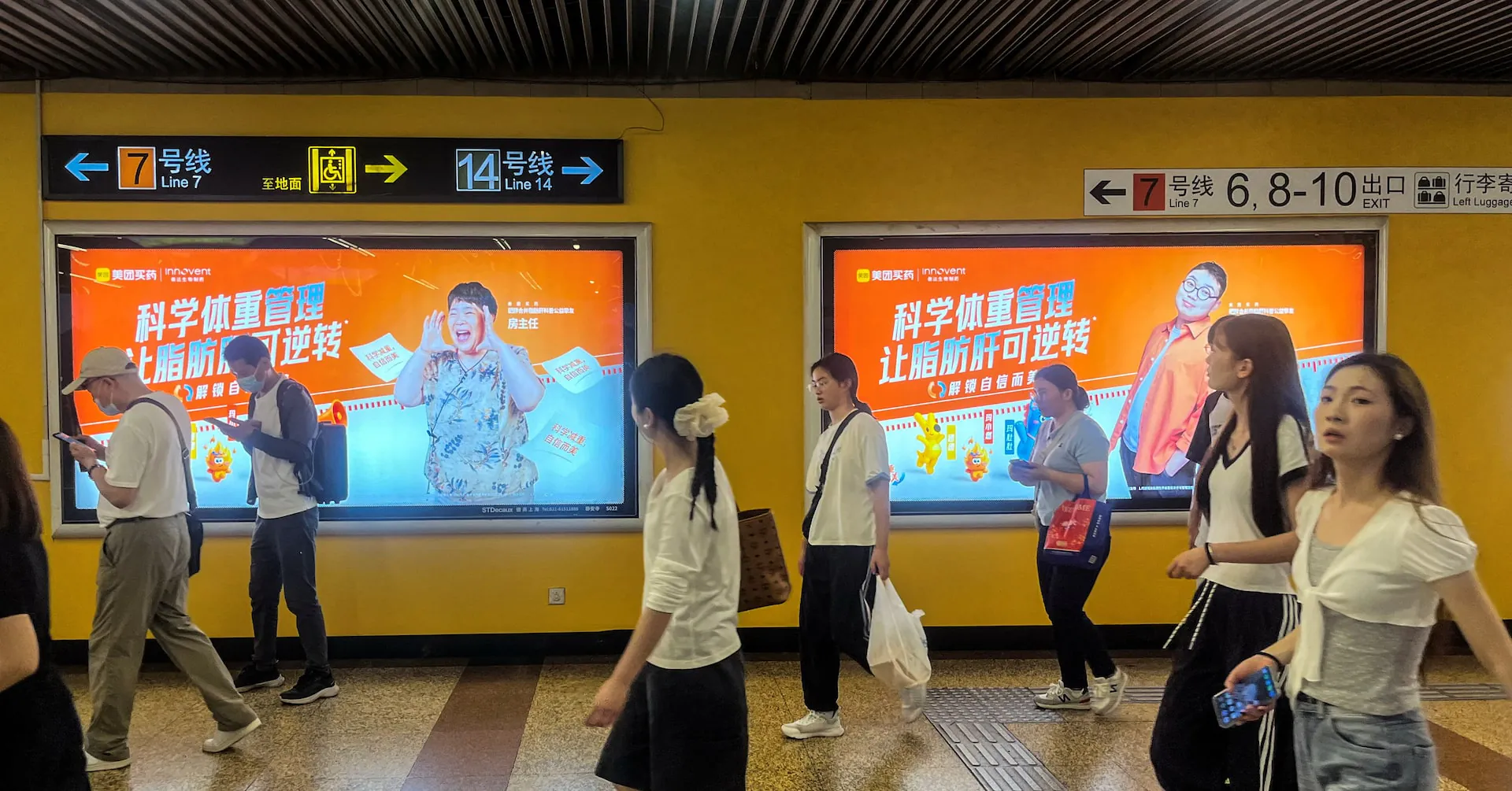
Pharma giants are getting creative in China's booming weight-loss market. Since direct-to-consumer prescription drug ads are banned, companies like Novo Nordisk, Eli Lilly, Pfizer, and Innovent are running "obesity awareness" campaigns in subway stations, gyms, and soccer stadiums — carefully skirting the rules. With GLP-1 sales projected to hit $4 billion in China within a decade, the stakes — and the creative workarounds — are only getting bigger.
China's obesity crisis is a massive business opportunity — and drugmakers are pulling out all the stops to capture it. Novo Nordisk, Eli Lilly, Pfizer, and local firm Innovent Biologics are all competing for a slice of China's GLP-1 weight-loss market, but there's a catch: China bans direct-to-consumer advertising of prescription medicines. So instead, companies are flooding metro stations, gyms, and sports stadiums with "disease awareness" campaigns that carefully avoid naming their products — while leaving little doubt about what they're selling.
The tactics range from Lilly's subway banners about snoring (a symptom of sleep apnea, which Mounjaro has shown benefit for in clinical trials) to Innovent's billboards featuring a mascot suspiciously named "Madudu" — a nod to its drug mazdutide. Pfizer partnered with gym chain Supermonkey for a "healthy weight loss party," and Novo teamed up with state broadcaster CCTV for a street health exhibit in Beijing. Legal experts warn some campaigns may already be crossing the line into illegal drug promotion.
Why it matters: China represents one of the largest untapped markets for obesity drugs globally. The regulatory gray zone these companies are navigating could set precedents — or trigger crackdowns — that shape how pharma markets blockbuster drugs in heavily regulated markets worldwide.


