Loading Curie Briefs...
Getting the latest healthcare news for you
Getting the latest healthcare news for you

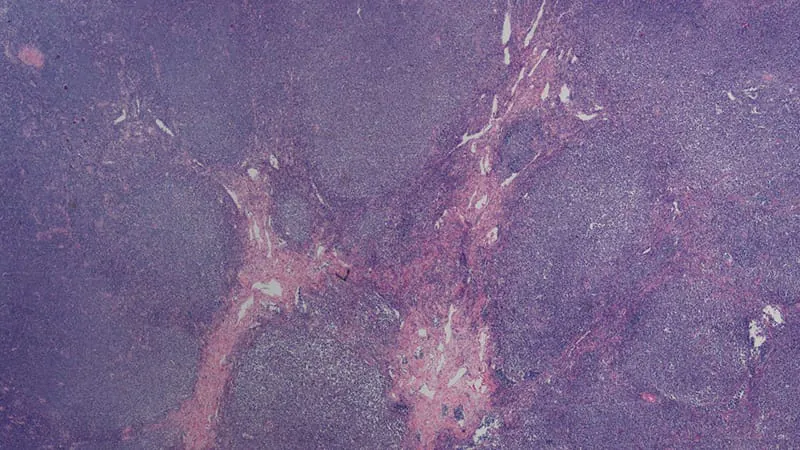
A phase 2 trial found that combining mosunetuzumab and polatuzumab vedotin achieved an 88% objective response rate in patients with relapsed/refractory mantle cell lymphoma — a group with very few good treatment options. Nearly 80% of patients achieved a complete response. The results are encouraging, though the study was small and follow-up was limited.
For patients with relapsed or refractory mantle cell lymphoma (MCL) who've already been through multiple treatments — including BTK inhibitors and CAR T-cell therapy — options are slim and outcomes are grim. A new phase 2 trial is offering a potential lifeline: a fixed-duration combination of mosunetuzumab (a bispecific antibody) and polatuzumab vedotin (an antibody-drug conjugate).
The multicenter study enrolled 42 heavily pretreated patients (median age 68, median of 3 prior therapies). Patients received subcutaneous mosunetuzumab for up to 17 cycles, with polatuzumab vedotin added during the first 6 cycles. Over a median follow-up of ~16 months, the combo delivered an 88% objective response rate and a 78.6% complete response rate — far exceeding the historical control benchmark of 30%. The safety profile was notable: 69% of patients experienced grade 3/4 adverse events, and cytokine release syndrome occurred in 43%, though all cases were mild (grade 1–2).
By the Numbers:
Why it matters: Relapsed/refractory MCL after BTK inhibitor and CAR T-cell therapy is a clinical dead end for many patients. If confirmed in larger trials, this fixed-duration regimen could fill a critical gap where FDA-approved options are scarce.