Loading Curie Briefs...
Getting the latest healthcare news for you
Getting the latest healthcare news for you

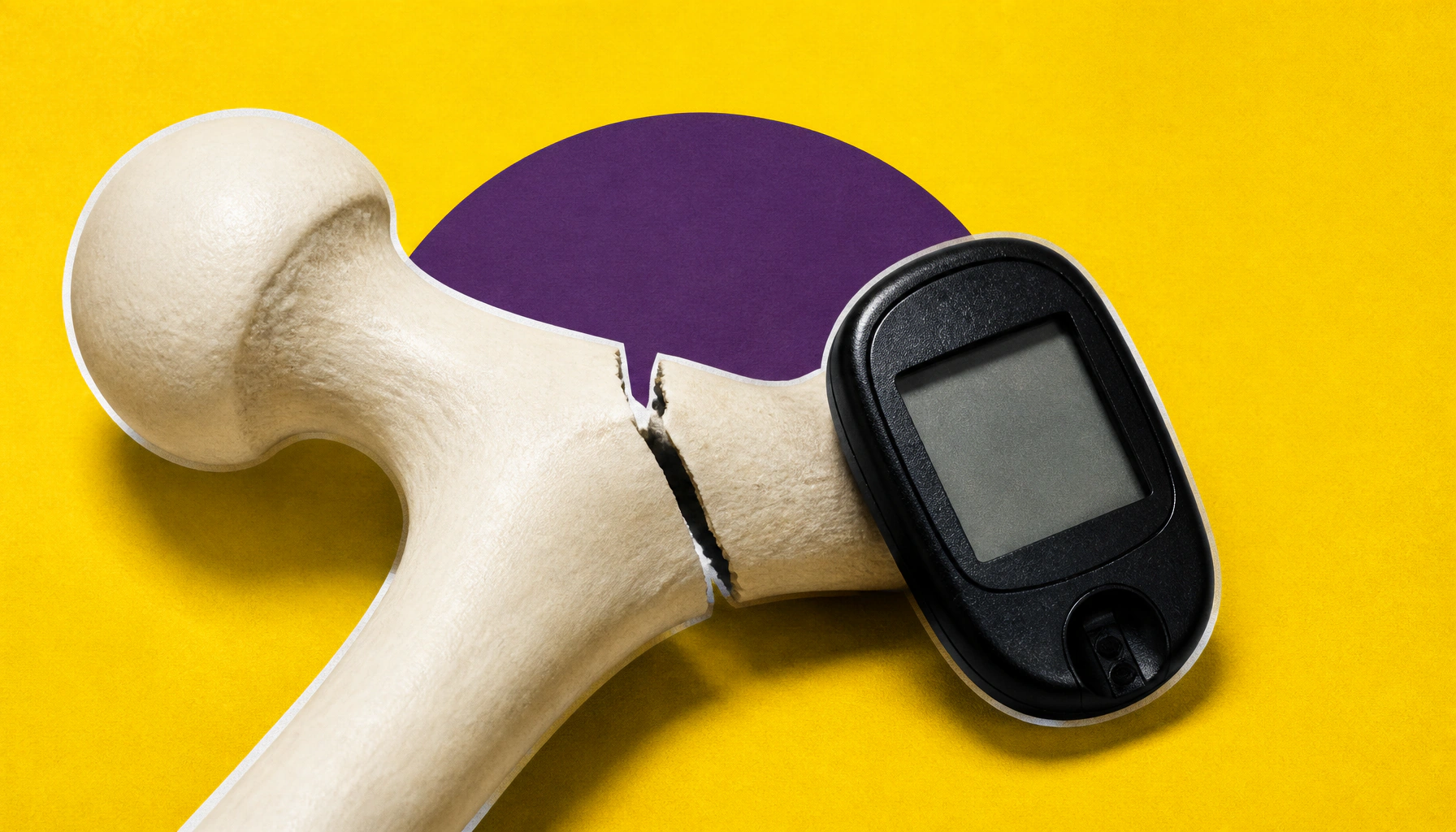
People with type 1 diabetes (T1D) face more than double the fracture risk compared to those without diabetes, starting as early as ages 10–19. The risk climbs sharply as diabetic kidney disease worsens, and a large Finnish study suggests bone health screening may need to start much earlier than current guidelines recommend.
People with type 1 diabetes (T1D) are at significantly higher risk for fractures than those without diabetes — and that risk starts surprisingly early. A large Finnish cohort study following over 5,000 adults with T1D for a median of nearly 33 years found that fracture incidence was more than twice as high in T1D patients, with the gap emerging as early as ages 10–19 and widening with age. Women with T1D were hit harder, facing 24% higher risk for any fracture and 67% greater risk for major osteoporotic fractures compared to men with T1D.
The picture gets grimmer as kidney disease enters the equation. Fracture risk rose in a stepwise fashion with worsening diabetic kidney disease (DKD) — patients with kidney failure had over five times the fracture risk of controls, and hip fracture risk was nearly 19 times higher. A separate Danish study reinforced these findings, showing T1D (but not T2D after age adjustment) was independently linked to higher rates of femoral fractures.
By the numbers:
Why it matters: Current guidelines typically recommend fracture screening in middle-aged or older adults, but these findings suggest clinicians should start assessing bone health much earlier in T1D patients — especially those with kidney disease, poor glycemic control, or a history of DKA or hypoglycemic coma.