Loading Curie Briefs...
Getting the latest healthcare news for you
Getting the latest healthcare news for you

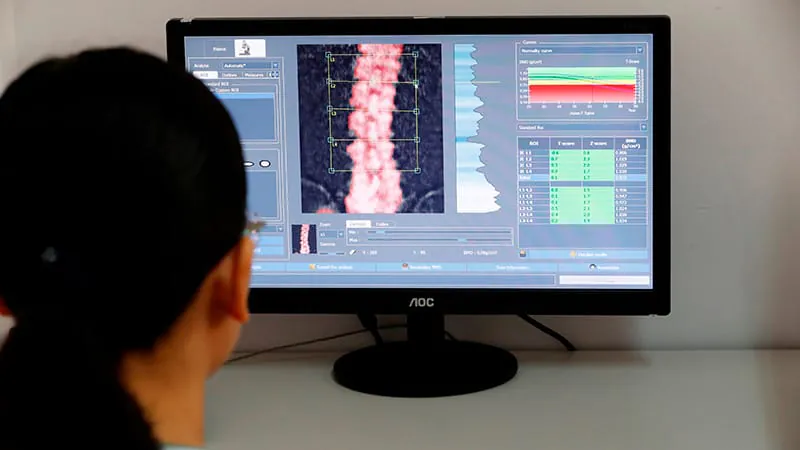
Denosumab beats alendronate for lumbar spine bone density in RA patients on steroids — but with a catch. A new retrospective study found denosumab led to significantly greater lumbar spine bone mineral density gains in postmenopausal women with rheumatoid arthritis on long-term glucocorticoids. However, the denosumab group showed a numerically higher fracture rate (8.1% vs 1.6%), though the difference wasn't statistically significant.
Denosumab may be the stronger bone-builder, but the full picture is more nuanced. A multicenter retrospective study out of China compared denosumab and alendronate in 295 postmenopausal women with rheumatoid arthritis (RA) on long-term oral glucocorticoids — a population at high risk for osteoporosis and fractures. After propensity score matching, denosumab showed significantly greater improvement in lumbar spine bone mineral density (BMD) over one year compared to alendronate.
That said, a notable trend emerged: the denosumab group had a higher fracture rate (8.1%) compared to the alendronate group (1.6%), though this difference did not reach statistical significance — likely due to the small sample size and limited number of fracture events. No significant differences were found in hip BMD or bone turnover markers between the two groups.
By the Numbers:
Why it matters: For clinicians managing osteoporosis in RA patients on steroids, denosumab offers superior lumbar spine BMD gains — but the numerically higher fracture trend warrants careful consideration. Individualized treatment decisions and long-term fracture monitoring remain essential, and larger prospective studies are needed to settle the fracture question definitively.