Loading Curie Briefs...
Getting the latest healthcare news for you
Getting the latest healthcare news for you

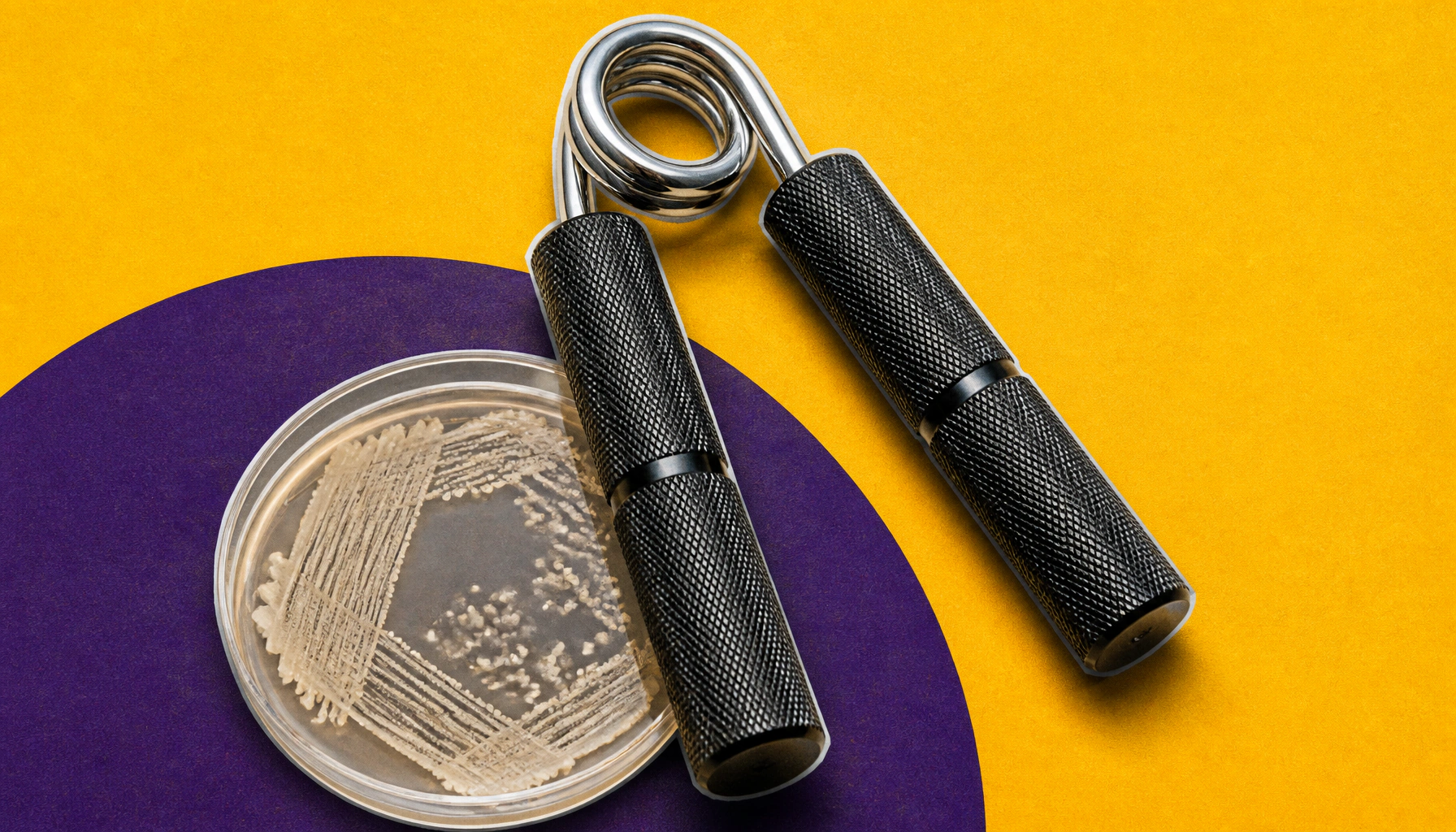
Could your gut hold the secret to staying strong as you age? A bacterium called Roseburia inulinivorans was linked to significantly greater muscle strength in both humans and mice. Older adults carrying it had 29% stronger grip strength, and mice treated with it gained ~30% more grip strength — raising hopes for a probiotic to combat age-related muscle loss.
A species of gut bacteria called Roseburia inulinivorans has been linked to greater muscle strength in humans and improved muscle performance in mice, according to new research published in the journal Gut. Scientists from the Netherlands and Spain analyzed stool samples from 90 young adults and 33 older adults, finding that among older participants, those with detectable levels of R. inulinivorans had significantly stronger grip strength — without a corresponding boost in cardiorespiratory fitness, suggesting a muscle-specific effect.
In mice, the findings got even more compelling. Animals treated with R. inulinivorans developed larger muscle fibers, a greater proportion of fast-twitch (type II) fibers — key for power and intensity — and showed altered metabolic activity inside muscle tissue. Notably, R. inulinivorans levels were found to be lower in older adults, mirroring the rise in age-related muscle loss (sarcopenia).
Why it matters: Sarcopenia affects millions of older adults, contributing to frailty, falls, and loss of independence. If R. inulinivorans can be developed into a safe, targeted probiotic, it could offer a novel, non-pharmacological tool for preserving muscle strength with age — a significant gap in current clinical options.