Loading Curie Briefs...
Getting the latest healthcare news for you
Getting the latest healthcare news for you

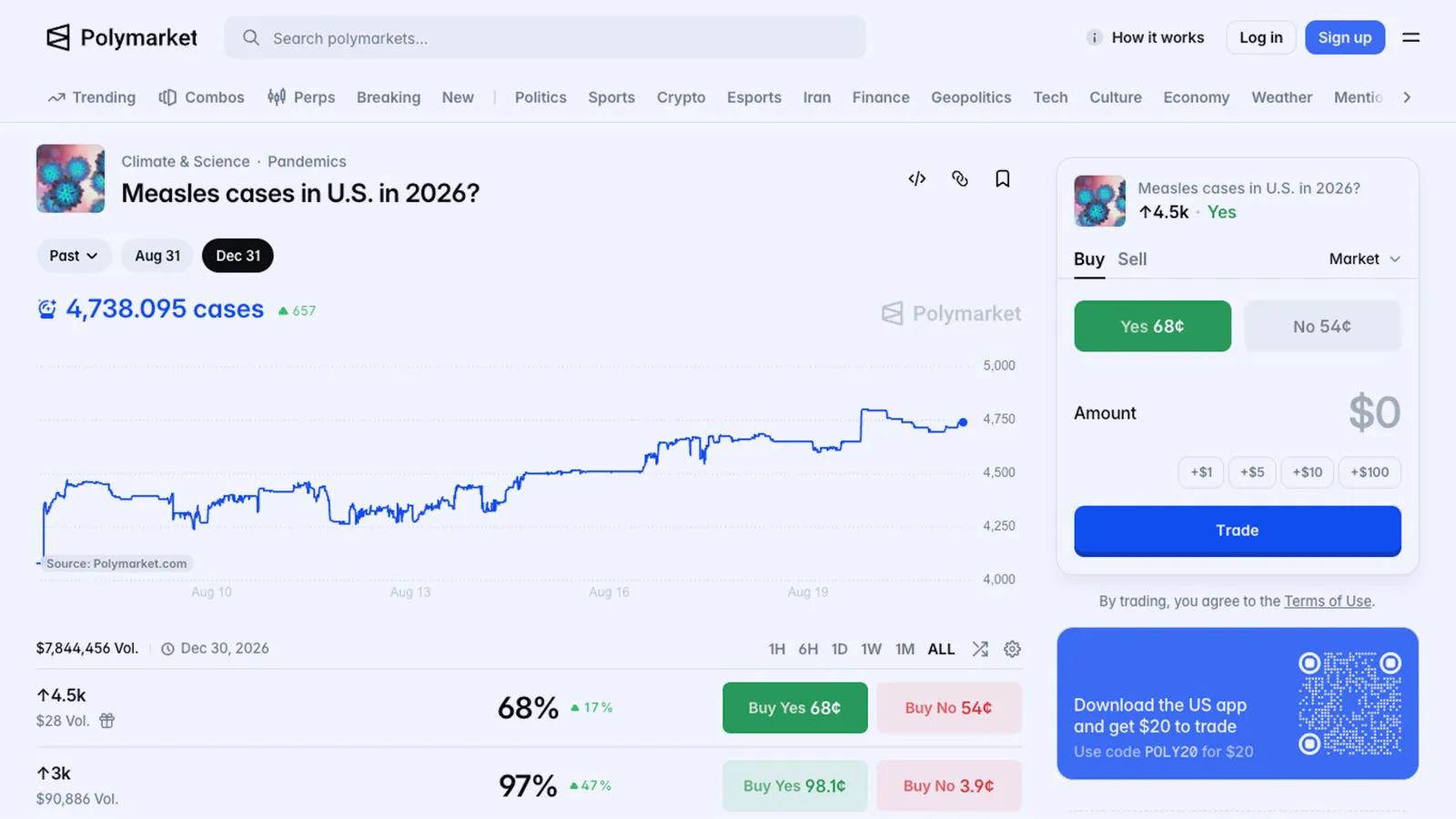
A $7.8 million Polymarket bet on U.S. measles cases in 2026 is tracking numbers — but not the human cost. From encephalitis and immune system destruction to a fatal chronic brain disease that strikes years later, measles leaves a trail of suffering that no betting board captures. The children who will bear these consequences are in kindergarten classrooms right now.
A $7.8 million Polymarket betting pool is wagering on how many measles cases the U.S. will record in 2026 — but the numbers being traded tell only a fraction of the story. Writing in MedPage Today, physician Robert Shpiner breaks down what those case counts actually mean in human terms: encephalitis, seizures, pneumonia, blindness, hearing loss, and immune system devastation that can leave children vulnerable to deadly infections for years after recovery.
One of the most chilling long-term consequences is subacute sclerosing panencephalitis (SSPE) — a progressive, fatal brain disease caused by measles virus that lies dormant for 7–10 years before surfacing. Children who seem fully recovered can develop cognitive decline, whole-body spasms, and eventually complete unresponsiveness. There is no treatment, and survival is nearly impossible.
By the Numbers:
Why it matters: The true burden of measles won't show up in 2026 case counts — some of its deadliest effects won't emerge until 2034 and beyond. As the U.S. surpasses 1,000+ cases this year, clinicians and policymakers need to reckon with consequences that extend far past the acute illness.